 Kes Faucets



How to Check Faucet Compatibility Before Buying
浏览次数:732 分类:Blogs
Choosing a new faucet is one of those home upgrades that seems simple—until you realize how many details go into making the right choice. You might find a beautiful faucet that fits your style perfectly, only to discover that it doesn’t fit your sink, countertop, or plumbing connections. That’s why understanding **faucet compatibility** is essential before buying. Whether you’re renovating a bathroom, upgrading your kitchen, or replacing an old fixture, checking compatibility ensures a smooth installation, prevents leaks, and saves you time, money, and frustration. In this guide, we’ll break down exactly how to check faucet compatibility before you buy, covering everything from mounting types to water supply connections.
1. Understand the Faucet Mounting Type
The first thing to check when shopping for a new faucet is **how it mounts**. Faucets come in several configurations depending on where they attach—on the sink, countertop, or wall. Choosing the wrong type means it simply won’t fit.
- Deck-Mounted Faucets: These are installed directly on the sink or countertop. They are the most common type for kitchens and bathrooms. Before buying, check how many holes your sink or counter has (usually 1 to 4).
- Wall-Mounted Faucets: These attach to the wall above the sink and require in-wall plumbing. They’re stylish and easy to clean around but need precise installation and proper wall clearance.
- Vessel Sink Faucets: If you have a vessel-style sink that sits above the counter, you’ll need a tall faucet or one designed specifically for vessel sinks.
Tip: If you’re replacing an existing faucet, it’s easiest to choose one with the same mounting style and hole configuration to avoid additional modifications.
2. Check the Sink Hole Configuration
Every sink has a certain number of **pre-drilled holes**, which determine what type of faucet it can accommodate. These holes are used for the faucet handles, spout, and sometimes a sprayer or soap dispenser. Here’s what to look for:
- Single-Hole Sinks: Designed for single-handle faucets or touchless models with one mounting point.
- Three-Hole Sinks: Common in bathrooms and kitchens. Usually, one hole is for the spout and two for handles (hot and cold).
- Four-Hole Sinks: Found in many kitchen setups, with one extra hole for a side sprayer, soap dispenser, or filtered water tap.
If your new faucet doesn’t match the number of holes in your sink, don’t worry—there are solutions. For example, **deck plates** (also called escutcheons) can cover unused holes, or you can drill new ones if the countertop material allows it. However, this adds complexity and may require a professional.
3. Verify the Faucet and Sink Size Compatibility
Size matters when it comes to faucet compatibility. A faucet that’s too big can overwhelm a small sink, while one that’s too short might not reach far enough. To get the right fit, pay attention to these dimensions:
- Spout Height: The vertical distance from the base to the highest point of the faucet. Taller spouts work well with deep sinks but may splash more in shallow ones.
- Spout Reach: The distance from the center of the faucet body to where the water lands. Make sure the stream falls close to the center of your sink bowl for comfortable use.
- Overall Clearance: Check how much space you have above and behind the sink—especially for bathroom vanities with mirrors or kitchen faucets under cabinets.
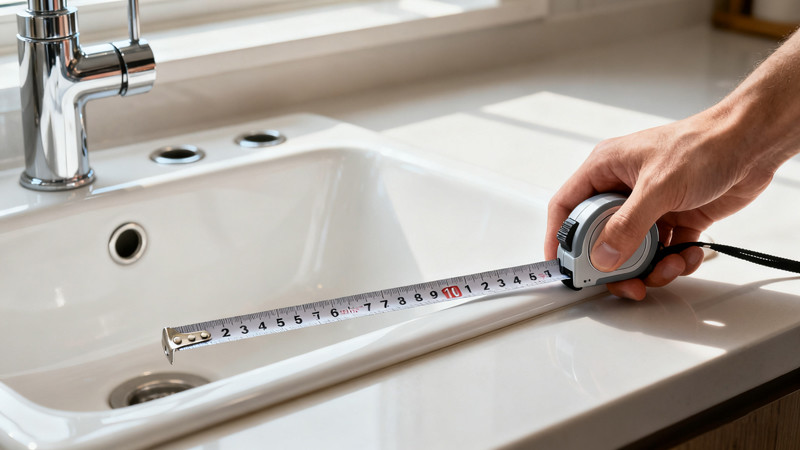
Measure carefully before purchasing. Manufacturers usually list these specifications, so you can compare them with your sink’s size to ensure a perfect fit.
4. Check Water Supply Line Compatibility
Your faucet connects directly to your home’s water supply lines, so it’s crucial that the fittings match. Most modern faucets use **standard ⅜-inch compression fittings**, but older homes may still have ½-inch connections. Here’s what to check:
- Connector Size: Measure or check your existing shutoff valves to determine the correct size.
- Valve Type: Make sure the faucet’s hoses are compatible with either compression or threaded connections.
- Hose Length: Ensure the included supply lines are long enough to reach the shutoff valves beneath your sink. If not, you may need extension hoses.
Using adapters is possible but not ideal—it adds extra connection points where leaks can develop. Whenever possible, choose a faucet with built-in hoses that match your valve size directly.
5. Consider Water Pressure Requirements
Not all faucets perform the same under different water pressures. Some high-end or commercial-style faucets need stronger pressure to function correctly, especially those with pull-down sprayers or filtration systems. On the other hand, low-flow faucets are designed to perform well even with lower pressure. If your home’s water pressure is below 40 psi, look for models rated for low-pressure systems. Checking this before buying ensures consistent performance and avoids issues like weak flow or uneven spray patterns.
6. Confirm Compatibility with Accessories
If you plan to add accessories—like a soap dispenser, filtered water tap, or side sprayer—you’ll need to ensure your sink and faucet configuration can support them. Some faucets come with optional add-ons that require extra holes, while others can only accommodate certain types of attachments. For example, pull-down kitchen faucets typically don’t support separate sprayers, as they already integrate one into the spout.
7. Match the Faucet Style with Your Sink and Décor
While technical compatibility is essential, aesthetic harmony matters too. The faucet should match your sink’s design, shape, and finish for a cohesive look. Consider these style factors:
- Finish: Chrome, brushed nickel, matte black, and brass finishes should coordinate with other bathroom or kitchen fixtures.
- Shape: Sleek, curved faucets pair well with rounded sinks, while angular designs complement square or modern basins.
- Theme: Choose a style consistent with your room’s design—traditional, industrial, or minimalist.
While style doesn’t affect performance, a mismatched faucet can throw off your entire design. Matching finishes and shapes ensures both functionality and aesthetic appeal.
8. Check for Countertop Thickness Compatibility
Some countertops, especially those made of stone or composite materials, can be quite thick. Not all faucets are designed to mount through thick surfaces. Before buying, verify the **maximum deck thickness** your faucet supports—it’s usually listed in the product specifications. If your counter exceeds that limit, you may need an extension kit or a faucet designed for thicker installations.
9. Consider Installation Difficulty
Even if a faucet is technically compatible, some designs are easier to install than others. For example, single-hole faucets are generally simpler to mount than three-piece widespread models. If you’re planning a DIY installation, look for faucets labeled as **“easy install”** or **“tool-free connection”**. These often come with pre-attached hoses and quick-connect fittings, saving time and hassle.
10. Double-Check Warranty and Brand Support
Lastly, before making your purchase, review the manufacturer’s warranty and after-sales support. A reliable warranty indicates the company’s confidence in its product’s durability and compatibility. Some brands even provide detailed compatibility charts or customer service assistance to help you choose the right model for your setup.
Conclusion
Buying a faucet isn’t just about picking a design you love—it’s about ensuring it fits seamlessly with your sink, plumbing, and space. Checking **faucet compatibility** before buying helps you avoid installation headaches, costly returns, and unexpected leaks. From mounting styles and hole configurations to water supply fittings and pressure requirements, each factor plays a role in achieving a perfect match. By taking a few extra minutes to measure, verify, and compare specifications, you can choose a faucet that not only looks great but performs flawlessly for years to come. When in doubt, consult your plumber or the faucet manufacturer—because the right fit means lasting comfort and confidence in your home’s most-used fixture.
您好!请登录