 Kes Faucets






Why Outdoor Faucets Lose Pressure
浏览次数:2674 分类:Blogs
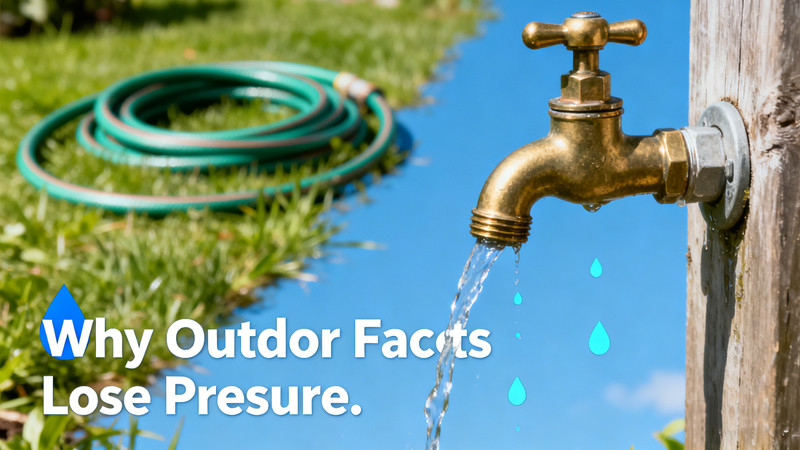
Outdoor faucets play an essential role in everyday home tasks—watering lawns, washing cars, filling buckets, running sprinklers, or supplying water to garden hoses. So when your outdoor faucet suddenly loses pressure, everything becomes slower and more frustrating. Fortunately, pressure loss is usually caused by identifiable issues, and most can be fixed without major plumbing work.
This guide breaks down the most common reasons outdoor faucets lose pressure, how to diagnose each issue, and what you can do to restore full water flow.
1. Mineral Buildup and Sediment Blockage
One of the leading causes of low pressure in outdoor faucets is mineral buildup—especially in areas with hard water. Over time, calcium and magnesium deposits accumulate inside the faucet, spout, or hose connection, narrowing the passage and reducing water flow. Sediment from old pipes can also lodge inside outdoor spigot components.
Signs:
-
Water dribbles out even with full valve rotation
-
White or brown chalky deposits around the spigot
-
Reduced flow only from this faucet, not others
Fix:
Remove the hose bib or aerator (if present) and soak it in vinegar or a descaling solution for a few hours to break down the minerals. Flushing the pipe by briefly removing the valve core may also help.
2. Partially Closed or Faulty Shutoff Valve
Most homes have an indoor shutoff valve that controls water to the outdoor faucet. These valves are often overlooked, especially in winterized systems.
If the shutoff valve is only partially open—or has internal wear—it restricts flow.
Signs:
-
Other faucets inside the house have normal pressure
-
Turning the interior valve slightly increases flow
-
Valve handle is stiff or corroded
Fix:
Fully open the indoor shutoff valve.
If it is difficult to turn, leaking, or doesn’t improve pressure, the valve may need replacing.
3. Damaged or Bent Outdoor Faucet Valve Stem
Outdoor faucets—especially older ones—have long valve stems that extend deep into the wall. These stems can become bent, worn, or partially stripped inside the faucet.
A damaged stem prevents the valve from opening fully, reducing water pressure significantly.
Signs:
-
Handle spins more than usual
-
Valve feels rough while turning
-
Pressure never reaches full even when fully opened
Fix:
Replace the faucet stem or the entire outdoor hose bib. Modern frost-free designs are more durable and resistant to internal wear.
4. Leaks Inside the Wall or Underground
A hidden leak is one of the most serious causes of outdoor faucet pressure loss. Water intended for the spigot may be escaping inside the wall, beneath the slab, or into the yard.
Signs:
-
Wet soil or puddles near the faucet even when off
-
Mold, moisture, or discoloration inside the wall
-
Large pressure drop when faucet is turned on
-
Water meter spins even when all fixtures are off
Fix:
Shut off water immediately and inspect for structural leaks.
Professional repair is recommended, as leaks behind walls or underground require specialized detection tools.
5. Kinked or Collapsed Water Supply Pipe
Outdoor faucets are often fed by narrow copper or PEX lines. These pipes can kink, collapse, or bend due to:
-
Freezing temperatures
-
Settling foundations
-
Poor installation
-
Accidental impact behind the wall
When the pipe narrows, water flow decreases dramatically.
Signs:
-
Outdoor faucet pressure suddenly drops
-
No signs of mineral buildup
-
Pressure loss may worsen over time
-
Pipe makes unusual noises when water is turned on
Fix:
Expose the supply line (either in a basement, crawl space, or wall cavity) and replace the damaged section of pipe.
6. Faulty Vacuum Breaker or Backflow Preventer
Many modern outdoor faucets include a vacuum breaker to prevent water from siphoning back into the home. While this is an important safety feature, it can become clogged or damaged.
Signs:
-
Water sprays from top of the faucet when running
-
Pressure drops significantly with a hose attached
-
Backflow preventer leaks or rattles
Fix:
Remove and clean the vacuum breaker.
If cracked or corroded, replace it with a compatible model.
7. Hose-Related Issues (Very Common)
Sometimes the faucet is not the problem at all—the hose is.
Common hose issues include:
-
Kinks or twists
-
Clogged hose nozzles
-
Collapsed inner lining
-
Debris inside the hose
-
Restrictive spray attachments
Signs:
-
High pressure without the hose attached
-
Pressure drops only when using a nozzle
-
Hose looks worn or bulges in sections
Fix:
Test the faucet without the hose.
If the flow is strong, replace or repair the hose instead.
8. High Demand on the Water System
If multiple household appliances or fixtures run simultaneously, your outdoor faucet may receive less pressure. This is especially common in older homes with narrower plumbing systems.
Causes:
-
Washing machine filling
-
Shower or dishwasher running
-
Irrigation system operating simultaneously
Fix:
Test your outdoor faucet when no other fixtures are running.
If pressure improves, consider upgrading your home’s water supply lines or adjusting water usage patterns.
9. Municipal Water Supply Issues
Sometimes the issue originates outside your home. City water pressure can fluctuate due to:
-
Maintenance
-
Water main breaks
-
High seasonal demand
-
Temporary valve adjustments
Fix:
Check with neighbors or your water provider.
If pressure is low throughout your area, the issue will likely resolve once city repairs are completed.
Conclusion
An outdoor faucet losing pressure can be caused by anything from mineral buildup to hidden leaks, collapsed pipes, faulty shutoff valves, or simple hose problems. The first step is identifying whether the issue originates in the faucet itself, the supply line, or the broader water system. With proper diagnosis, most pressure issues can be fixed quickly and cost-effectively, restoring strong, reliable outdoor water flow.
您好!请登录