 Kes Faucets








Is a Bar Faucet With Side Sprayer Worth It for a Small Prep Sink?
浏览次数:98 分类:Product
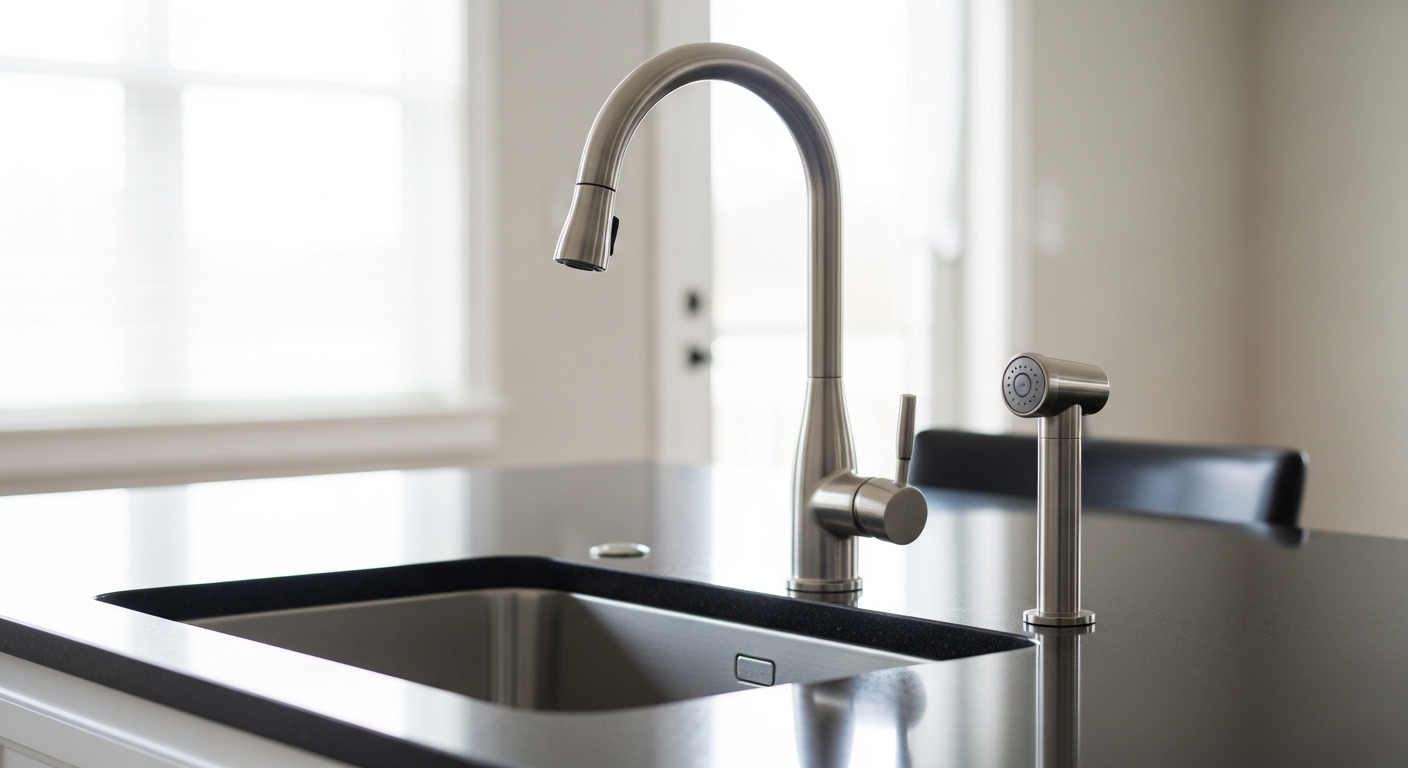
A bar faucet with side sprayer is a compact, single-handle faucet built for a secondary sink — a bar, island prep, or wet-bar basin — paired with a separate hand-held spray wand mounted in its own deck hole. Think of it as a scaled-down version of the classic two-piece kitchen faucet: the main spout handles fills and steady flow, and the detachable side sprayer handles everything that needs aim and reach. For people who actually use their second sink, that split design earns its counter space. Below, we’ll answer the real questions buyers ask before they spend the money — sizing, hole count, finish, flow rate, and whether a side sprayer beats a modern pull-down at this scale.
What exactly is a bar faucet with side sprayer, and how is it different from a kitchen faucet?
A bar faucet is simply a smaller-scale kitchen faucet sized for a bar or prep sink, and the “with side sprayer” version adds a separate spray wand in its own hole beside the spout. The difference from a full kitchen faucet is mostly scale and flow: bar faucets typically have a lower spout, a narrower base, and a flow rate around 1.5 to 1.8 GPM.
The “side sprayer” part is the key distinction. Instead of a sprayer integrated into the spout head (a pull-down or pull-out), the spray wand sits in a dedicated deck hole and connects to the faucet body through a diverter under the counter. Pull the trigger and a diverter valve redirects water from the spout to the wand. Let go, and flow returns to the spout. It’s the same mechanism that’s been on American kitchen sinks for 50 years, just shrunk down for a bar.
Here’s why people still choose it at the bar-sink scale: a bar sink is small, so a bulky pull-down spout can look top-heavy and overwhelm the basin. A slim spout plus a discreet side sprayer keeps the visual footprint light while still giving you a sprayer when you need to blast pulp out of a strainer or rinse a cutting board. If you’re weighing the two styles head-to-head, our deeper breakdown in Pull-Down Faucet vs. Side Sprayer: Which is Right for You? walks through the trade-offs in detail.
How many holes do I need in my countertop for a bar faucet with side sprayer?
You need two holes: one for the faucet body and one for the side sprayer. Standard spacing puts the sprayer hole about 4 to 6 inches from the faucet, and both holes are typically 1⅜ inches (35 mm) in diameter — the universal North American faucet hole size.
This is the single most common mistake buyers make, so confirm it before you buy. Pre-drilled bar sinks and countertops come in different configurations:
- Single-hole sink: You can only fit a faucet body, not a separate sprayer — unless you drill a second hole in the counter or use a deck plate (escutcheon) that covers extra holes. A side-sprayer model won’t work here without modification.
- Two-hole sink: The ideal setup. One hole for the faucet, one for the sprayer. This is exactly what a bar faucet with side sprayer is designed for.
- Three- or four-hole sink: Common if the sink was made for a widespread faucet or a soap dispenser. You can cover unused holes with a deck plate or fit a soap/lotion dispenser.
Measure twice. A granite or quartz countertop is expensive and slow to re-drill, and the hole spacing on your sink is fixed. Before you order anything, it’s worth reading How to Check Faucet Compatibility Before Buying so you match hole count, spacing, and spout reach to your actual basin.
Is a side sprayer better than a pull-down at the bar-sink scale?
For a small bar or prep sink, a side sprayer is often the smarter choice — it keeps the spout slim and the look balanced, and it’s cheaper to replace if the sprayer wears out. A pull-down wins when you want one clean, minimalist fixture and don’t mind a taller spout dominating a small basin.
It really comes down to three things: looks, repairability, and how you use the sink. Here’s the honest comparison:
| Factor | Bar Faucet With Side Sprayer | Pull-Down Bar Faucet |
|---|---|---|
| Spout profile | Slim, low — flatters a small sink | Taller, bulkier head |
| Holes needed | Two | One |
| Sprayer reach | Excellent — full hose pulls free of the deck | Good — limited by hose length in spout |
| If sprayer fails | Swap the wand alone (cheap, ~$15–30) | Often replace the whole spray head |
| Drips/wear point | Diverter valve under counter | Hose weight/retraction spring |
| Typical price | $60–$180 | $70–$220 |
| Best for | Heavy prep use, traditional or transitional kitchens | Minimalist look, single-hole installs |
One practical note: side sprayers do have a few more failure points (the diverter and the spray hose), but each part is individually cheap and easy to replace. A pull-down hides its sprayer inside the spout, which looks cleaner but usually means swapping a pricier assembly when something wears out. If you do heavy rinsing and want to keep repair costs low for years, the side sprayer ages gracefully.
What finish should I pick for a bar faucet, and will it match my main kitchen faucet?
Pick a finish that either exactly matches your main kitchen faucet or deliberately contrasts it — don’t land in the awkward “almost matching” middle. The safest crowd-pleasers for a bar faucet are brushed nickel and matte black, because they hide water spots and fingerprints far better than polished chrome.
Finish is where a small bar faucet punches above its weight visually, since it sits right next to your main faucet on the island or counter. Your options break down like this:
- Brushed/stainless nickel: The most forgiving. Hides spots, pairs with almost any cabinetry, and matches the most common kitchen faucet finish.
- Matte black: On-trend, bold against light counters and white sinks. Shows dust and dried water more than nickel, but a quick wipe keeps it sharp — see The Best Way to Keep Your Matte Black Faucet Looking New for upkeep.
- Chrome: Cheapest and brightest, but shows every water droplet and fingerprint. Great in a bright modern kitchen; tiring in a busy one.
- Champagne bronze / brushed gold: Warm, upscale look that’s having a moment in bar and prep zones.
Should the bar faucet match the main one? You have two clean strategies: match exactly (same brand and finish family is easiest), or intentionally contrast — for example, a matte black bar faucet against a brushed nickel main faucet. The one thing to avoid is two finishes that are close but not identical. If you’re considering mixing on purpose, our guide Mixing Metals: Can You Mismatch Faucets? shows how to make it look intentional instead of accidental.
How do I install a bar faucet with side sprayer myself?
You can install a bar faucet with side sprayer in about 45 to 90 minutes with basic tools — a basin wrench, adjustable wrench, plumber’s tape, and a bucket. The job is the same as a standard faucet swap, plus one extra step: connecting the side sprayer’s diverter line.
Here’s the workflow at a high level:
- Shut off the water at the under-sink supply valves and open the faucet to relieve pressure.
- Remove the old faucet (if replacing) by disconnecting supply lines and the mounting nuts under the deck.
- Drop the new faucet body through its hole and secure it from below with the mounting nut.
- Insert the side sprayer base into the second hole and tighten its nut. Feed the spray hose down through it.
- Connect the sprayer hose to the diverter on the underside of the faucet body — this is the part that’s unique to side-sprayer models. Hand-tighten, then a quarter turn with a wrench.
- Connect hot and cold supply lines, wrapping threads in plumber’s tape.
- Turn the water back on slowly and check every connection for drips. Test the sprayer trigger and make sure flow diverts cleanly.
Two tips that save headaches: don’t overtighten plastic diverter nuts (they crack), and run the water for a full minute with the aerator removed to flush out debris before you call it done. If your new faucet wobbles after install, that’s a mounting-nut issue — How to Tighten a Wobbly Faucet covers the fix in two minutes.
Why is my bar faucet’s side sprayer weak or leaking?
Nine times out of ten, a weak side sprayer is a clogged spray head or a failing diverter, and a leaking one is a loose hose connection or a worn diverter washer. Both are cheap, DIY-friendly fixes that don’t require a plumber.
Walk through the causes in order:
- Weak spray: Unscrew the spray head and soak it in white vinegar overnight to dissolve mineral scale. Hard water is the usual culprit.
- Spout keeps running when you squeeze the trigger: The diverter valve is worn or stuck. It’s a small part inside the faucet body — replace it, and full pressure returns to the wand.
- Drip under the sink: Re-seat and tighten the hose-to-diverter connection; replace the washer if it’s flattened.
- Low pressure across the whole faucet: This may be your home’s water pressure, not the faucet. Our explainer on How Water Pressure Affects Faucet Flow helps you tell the difference between a faucet problem and a plumbing one.
Because every part of a side sprayer is replaceable on its own, these faucets tend to outlast their warranties when maintained. A $20 diverter and a vinegar soak can add years of service.
How much does a good bar faucet with side sprayer cost in 2026?
Expect to pay $60 to $180 for a quality bar faucet with side sprayer in 2026, with the sweet spot for a durable, ceramic-disc-valve model from a reputable brand landing around $90 to $130. Below $50, you’re usually getting thin zinc-alloy bodies and rubber-disc valves that drip within a couple of years.
What separates a good one from a cheap one at this price:
| Price tier | What you typically get | Lifespan |
|---|---|---|
| Under $50 | Zinc body, plastic sprayer, rubber valve, basic chrome | 1–3 years |
| $60–$130 | Brass or solid body, ceramic-disc valve, metal sprayer, good finishes | 8–15+ years |
| $140–$180+ | Solid brass, premium finishes, lifetime-warranty hardware | 15+ years |
The two specs that matter most for longevity are the valve type (insist on ceramic disc, not rubber washer) and the body material (solid brass or stainless resists corrosion best). A few dollars more upfront for a ceramic-disc cartridge is the single best value decision you can make — it’s the part that determines whether your faucet drips in year two. To keep any finish corrosion-free over time, the habits in Prevent Faucet Corrosion with These Tips apply directly to bar faucets too.
FAQ
Can I use a bar faucet with side sprayer as my main kitchen faucet?
You can, but it’s usually a compromise. Bar faucets have lower spouts and tighter clearances designed for small basins, so filling tall stockpots or washing large sheet pans in a deep main sink can feel cramped. If your main sink is shallow or you have limited counter space, a bar faucet can work — but most people are happier using it where it belongs, on a secondary or prep sink.
What’s the standard flow rate for a bar faucet?
Most bar faucets flow at 1.5 to 1.8 GPM (gallons per minute), the same federal and WaterSense-aligned range as kitchen faucets. The side sprayer typically matches the spout’s flow. Some models include a flow restrictor in the aerator you can adjust; just don’t remove it entirely, since it also smooths the stream and reduces splashing in a small basin.
Do bar faucets with side sprayers come with a warranty?
Reputable brands back their bar faucets with a limited lifetime warranty on the finish and function, with separate coverage for the cartridge and sprayer parts. Always register your faucet and keep the receipt. Look for faucets that are certified to ANSI/NSF and cUPC standards — that certification means the product was independently tested for lead-free safety and durability, not just self-rated by the maker.
How do I clean the side sprayer if the spray pattern gets uneven?
Uneven spray almost always means mineral buildup on the spray face. Unscrew or unclip the spray head, soak it in a 50/50 white vinegar and water solution for a few hours, then scrub the nozzles gently with an old toothbrush. Rinse and reattach. In hard-water homes, doing this every few months keeps the pattern crisp and prevents the diverter from clogging.
Is a side sprayer or a separate soap dispenser a better use of my extra sink hole?
If you actively rinse, prep, and wash at the bar sink, the side sprayer is the better use of the hole — reach and rinsing power matter more day to day. If your bar sink is mostly for drinks and the occasional hand-wash, a soap or lotion dispenser may be more useful. You can also have both if your sink has three or four holes, which many bar setups do.
Will a bar faucet with side sprayer fit a single-hole sink?
Not without modification. A side-sprayer model needs two holes — one for the body, one for the wand. If your sink has only one hole, you’d need to drill a second hole in the countertop (easy in laminate, harder in stone) or choose a single-hole pull-down bar faucet instead. Always confirm your sink’s hole count before buying.
The Bottom Line: Should You Buy One?
A bar faucet with side sprayer is worth it whenever your second sink does real work — and for most homes with an island prep sink or a wet bar, it does. You get genuine rinsing reach, a slim spout that flatters a small basin, and repair parts that are cheap and individually replaceable. Match it to a two-hole sink, choose a ceramic-disc valve and a brushed nickel or matte black finish, and you’ll have a fixture that quietly outlasts trends. If your bar sink is purely ornamental or single-hole, a compact pull-down or a fixed bar faucet may serve you better.
About the author: This guide was written by the product team at kesfaucet, drawing on hands-on bench testing of bar and prep faucets, diverter teardown comparisons, and feedback from thousands of customer installs. KES (kesfaucet.com) designs and manufactures faucets, shower systems, and bathroom fixtures, and our products are built to ANSI/NSF and cUPC certification standards with lead-free, ceramic-disc cartridges and limited lifetime warranty coverage. We test every faucet line for flow consistency, finish durability, and leak resistance before it reaches your counter.
您好!请登录