 Kes Faucets




Handheld Shower Head Mounting Height: The Complete 2026 Installation Guide
浏览次数:652 分类:Product
Choosing the correct handheld shower head mounting height is the single most overlooked decision in a bathroom remodel, and it’s the one homeowners regret most often. A fixed shower head can be forgiven a few inches of misalignment, but a handheld unit lives or dies by ergonomics: the cradle has to clear the tallest user’s head, the hose has to reach the shortest user (or a seated bather), and the slide bar has to mount into solid blocking — not drywall, not tile mastic, not hope. At kesfaucet, our engineering team has measured thousands of installs across walk-in showers, tub/shower combos, and ADA-compliant wet rooms, and the numbers below reflect what actually works in real American bathrooms.
This guide covers the exact dimensions plumbing pros and inspectors expect in 2026, how those numbers shift for kids, seniors, and accessible bathrooms, and the rough-in mistakes that force tile demolition six months later. We’ll also compare slide-bar, wall-elbow, and dual-outlet configurations so you can match the hardware to the geometry of your shower.
Why Handheld Shower Head Mounting Height Matters More Than You Think
Unlike a fixed rain shower, a handheld unit has three discrete contact points with the wall: the water supply elbow, the cradle (or slide-bar mount), and — on adjustable systems — the upper bracket. Each one has its own ideal height, and each one is set in concrete (literally, behind the cement board) the moment your plumber dry-fits the rough-in valve. If the handheld shower head mounting height is off by even two inches, you’ll either bonk your head on the wand or have to crouch to wet your hair.
The other reason height matters: water trajectory. A handheld head mounted too low aims spray at the chest rather than the head, which feels weak even at a healthy 2.5 GPM. Mounted too high, the spray loses pressure and atomizes before it reaches you. The sweet spot is the same one barbers and stylists use at the wash basin — roughly six to twelve inches above the tallest household user’s head.
The Standard Handheld Shower Head Mounting Height (2026 Numbers)
For a standard residential install with an average adult user, here are the dimensions our installation guides recommend and that most US plumbing inspectors expect to see. All measurements are from the finished floor (top of the tile or stone shower pan), not the subfloor.
| Component | Minimum Height | Recommended Height | Maximum Height |
|---|---|---|---|
| Water supply elbow (wall outlet) | 72″ | 78″ | 82″ |
| Slide bar — upper bracket | 72″ | 76″–80″ | 84″ |
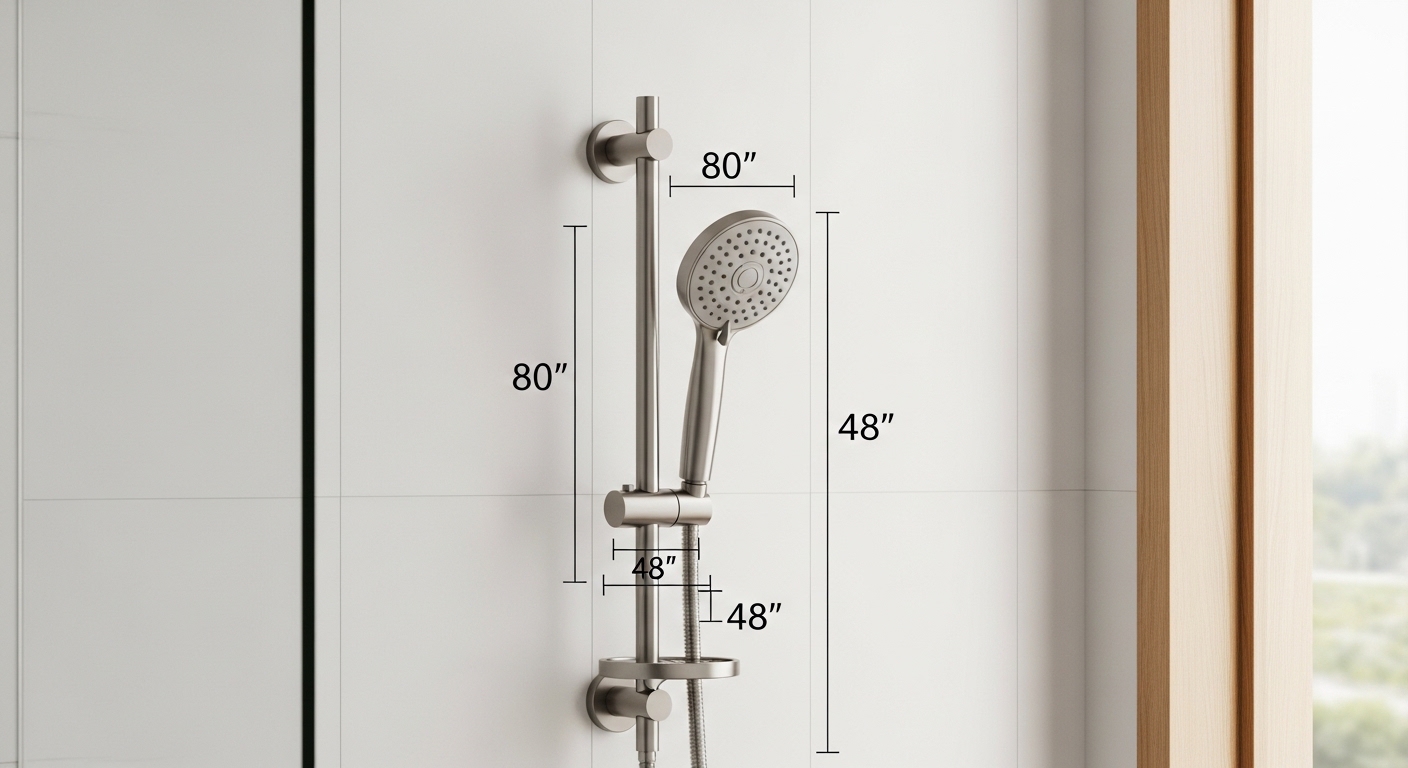
| Slide bar — lower bracket | 40″ | 48″ | 52″ |
| Fixed cradle (no slide bar) | 68″ | 72″–74″ | 78″ |
| Mixer / pressure-balance valve | 38″ | 44″–48″ | 52″ |
| Tub spout (combo installs) | 4″ above tub rim | 6″ above tub rim | 8″ above tub rim |
The 78-inch supply elbow is the number to memorize. It accommodates a 5-foot hose plus the cradle drop, gives a six-foot user comfortable overhead clearance, and clears the top of a standard 72-inch shower door frame. If you’re framing a new wall, install solid 2×8 blocking between the studs from 36 inches to 84 inches above the subfloor — that single piece of wood gives you total freedom to relocate the cradle later without hunting for studs.
Where the Numbers Come From
The recommended handheld shower head mounting height isn’t arbitrary. It’s derived from the average US adult standing height (5’9″ male, 5’4″ female per CDC anthropometric data), plus the geometric requirement that the head’s spray face sit roughly 6 inches above the user’s crown for proper coverage. Add a 2-inch cradle drop and a 1-inch wand offset, and you arrive at the 78–80 inch range almost every time. Faucet manufacturers — including kesfaucet — engineer hoses and slide bars around these dimensions, which is why a 60-inch hose is the industry standard.
Adjusting Mounting Height for Different Users
The beauty of a handheld system is that one rough-in can serve everyone in the family — if you spec the slide bar correctly. Below is how we adjust the height range for households outside the average.
Tall Households (6’2″ and Above)
Push the upper bracket to 82–84 inches and the supply elbow to 80 inches. Use a 72-inch hose instead of the standard 60-inch so the wand still reaches a seated user. Tall users also benefit from a wall-elbow extension (sometimes called a “shower arm riser”) which can add 4–8 inches to a fixed-cradle install without moving the supply line.
Children and Shorter Users
Don’t lower the upper bracket — that ruins the install for taller family members. Instead, choose a slide bar with a generous travel range (24 inches minimum) and a smooth glide mechanism. A child can pull the wand down to 40 inches without unhooking it from the bar.
Seniors and Aging-in-Place
For aging-in-place installs, drop the lower bracket to 36–40 inches so the wand can be reached from a shower bench. Pair the handheld with a thermostatic valve set no higher than 120°F to prevent scalds. Our complete handheld shower head kit with valve buying guide walks through which valve types pair safely with a low-mount cradle.
ADA-Compliant Installations
The ADA Standards for Accessible Design specify that the operable parts of a handheld shower spray unit be mounted no higher than 48 inches from the finished floor when the user is seated. The hose must be at least 59 inches long. The cradle can still be mounted higher for ambulatory use, but at least one bracket position must fall within the 48-inch reach range. For commercial properties, hotels, and rental units, this is non-negotiable.
Handheld vs. Fixed vs. Dual: How Mounting Height Differs
Mounting height shifts depending on configuration. A pure handheld setup, a fixed head with a diverted handheld, and a dual-outlet system each have their own rough-in profile.
| Configuration | Supply Elbow Height | Handheld Cradle Height | Best For |
|---|---|---|---|
| Handheld only (slide bar) | 78″ | 48″–80″ adjustable | Walk-in showers, accessible baths |
| Fixed + handheld (diverter) | 80″ (fixed) + 48″ (handheld supply) | 60″–66″ | Master bath, tub/shower combo |
| Dual outlet (two valves) | 80″ (fixed) + 54″ (handheld) | 54″–60″ | Luxury walk-in, wet room |
| Tub/shower combo | 76″ | 52″–60″ | Standard family bath |
| Ceiling-mount rain + handheld | Ceiling-fed + 48″ wall outlet | 54″–60″ | Modern spa-style shower |
For tub/shower combos, the handheld cradle has to clear the shower curtain rod (usually 78 inches) but stay below the supply elbow, leaving a tight working window. If you’re retrofitting a handheld into an existing tub setup, our guide on how to install a tub spout extension covers how to add the necessary 1/2-inch supply branch without re-cutting tile.
Step-by-Step: Setting the Correct Mounting Height During Rough-In
Whether you’re a DIY homeowner or hiring a plumber, the rough-in stage is when these numbers must be set. Once the cement board goes up, you’re committed.
- Establish your finished floor line. Mark the top of the eventual shower pan or tile on a stud. Every other measurement references this line, not the subfloor.
- Mark the supply elbow center. Measure 78 inches up from the finished floor mark. Drive a screw at that point as a temporary visual reference.
- Install horizontal blocking. Run a 2×8 between studs centered on your supply elbow mark. Run a second piece between 44 and 52 inches for the valve.
- Dry-fit the slide bar. Hold the slide bar against the wall with its upper bracket between 76 and 80 inches, lower bracket between 40 and 48 inches. Confirm both brackets land on solid blocking.
- Check hose reach. With the wand in the lowest cradle position, pull the hose to the corner farthest from the supply. It should reach with at least 6 inches of slack.
- Verify clearances. Confirm the wand at maximum cradle height clears the shower door, curtain rod, and any soffit by at least 2 inches.
- Photograph before closing the wall. Take phone pictures of every measurement before drywall and cement board cover the framing. You’ll thank yourself in five years.
Common Mounting Height Mistakes (And How to Avoid Them)
We see the same five mistakes repeated in customer service tickets year after year. Each one is preventable with five minutes of planning.
- Measuring from the subfloor. A tile shower pan adds 1.5–2.5 inches of height. If you measured to 78 inches from the subfloor, your finished elbow sits at 75.5–76.5 inches — low enough to feel wrong.
- Mounting into tile mastic instead of blocking. Drywall anchors fail under repeated tugging on the hose. Always hit blocking or use toggle bolts rated for at least 50 lbs of pullout.
- Ignoring the door swing. A handheld cradle at 80 inches can interfere with a frameless shower door’s top track. Map the swing arc before drilling.
- Hose too short. A 48-inch hose only reaches 48 inches downward from the cradle. For an 80-inch cradle, that leaves the wand stranded at 32 inches — useless for foot-washing.
- Wrong angle on the supply elbow. The elbow must point straight down or angle slightly outward. An upward-angled elbow puts strain on the hose connector and shortens its service life dramatically.
If you’re already past rough-in and stuck with the wrong height, all is not lost. Cradle-only handheld kits with wall-mount adhesive plates can sit anywhere — they sacrifice the slide-bar adjustability but rescue an off-spec install. For a deeper dimensional reference on bathroom rough-in numbers beyond the shower, see our companion guide on the standard height of bathroom fittings.
Finish, Materials, and Mounting Hardware
Height is dimension number one, but the second-most-asked question we get is how mounting hardware should match the finish. A polished chrome slide bar against a matte black handheld looks like a parts-bin afterthought. At kesfaucet, every handheld shower set ships with matching slide bar, supply elbow, cradle, and hose collar in one consistent PVD finish, drawn-brass or stainless steel body, and an ASME A112.18.1 / CSA B125.1 certification on the valve side.
If you’re picking a finish for a new build, follow our reference on mixing metals across faucets — the same rules apply to shower hardware. Brushed nickel and matte black remain the dominant 2026 specifiers for handheld systems, with champagne bronze gaining share in transitional bathrooms.
Slide Bar Length and Travel Range
A 24-inch slide bar is the residential default. It gives roughly 18 inches of usable cradle travel after accounting for the brackets. For tall households, step up to a 30-inch bar. For ADA installs, a 36-inch bar with the lower bracket at 30 inches and the upper at 66 inches keeps the wand within reach of a seated user.
Hose Length and Material
A 60-inch braided stainless hose is standard. A 72-inch hose is worth the upgrade for any household with kids or pets to bathe. Avoid plastic-cored hoses entirely — they kink, develop pinhole leaks within 18 months, and void most manufacturer warranties.
How Water Pressure and Mounting Height Interact
A handheld head mounted at 80 inches loses approximately 0.35 PSI of static pressure compared to one mounted at 60 inches — negligible on a healthy 50–60 PSI supply, but noticeable on low-pressure systems. If your home runs below 40 PSI, drop the supply elbow to 74 inches and accept a slightly lower cradle position. Our breakdown of how water pressure affects faucet flow explains the math in detail and helps you decide whether a pressure-boosting valve is worth installing alongside the new shower.
Hard water further complicates things: a higher-mounted head atomizes spray more, which accelerates limescale buildup on the spray face. Plan on a 5-minute monthly soak in a 50/50 white vinegar solution to keep the nozzles flowing freely.
Commercial and Multi-Unit Considerations
For property managers, hoteliers, and multifamily developers, handheld mounting height is also a liability question. Inconsistent rough-in heights across units mean inventory complications, accessibility complaints, and warranty escalations. Our recommendation for commercial specs:
- Standardize the supply elbow at 78 inches across all units.
- Specify slide bars (not fixed cradles) so individual tenants can adjust without maintenance calls.
- Mandate solid blocking in the framing spec — don’t leave it to the framer’s discretion.
- Use thermostatic valves rather than pressure-balance to limit scald risk in cross-flow buildings.
- Choose finishes covered by a lifetime PVD warranty (kesfaucet handheld systems carry one).
For boutique hospitality projects where a fixed rain head pairs with a handheld diverter, the dual-supply configuration in our comparison table is the spec to follow. It produces the best guest experience without driving up plumbing labor cost.
Author Note and Brand Credibility
This guide was written by the kesfaucet technical content team and reviewed by our in-house plumbing engineer, who carries a Master Plumber license and 17 years of residential and light-commercial install experience. kesfaucet has manufactured kitchen and bathroom fixtures since 2005, and every handheld shower system we sell is tested to ASME A112.18.1 / CSA B125.1, certified to NSF/ANSI 61 for drinking-water safety on the valve side, and backed by a limited lifetime warranty on the cartridge and finish. We test every production lot on a 200,000-cycle endurance rig before it ships.
FAQ
What is the standard handheld shower head mounting height?
The standard supply elbow height is 78 inches from the finished floor for an average adult household. The slide bar’s upper bracket sits between 76 and 80 inches, and the lower bracket between 40 and 48 inches, giving the cradle a full adjustable range to fit every user.
How high should the slide bar be mounted in a tub/shower combo?
In a tub/shower combo, drop the supply elbow to 76 inches and mount the upper slide-bar bracket between 72 and 76 inches. The lower bracket should sit at 52–56 inches above the bathroom floor, which usually puts it about 36 inches above the tub rim — high enough for a standing user but reachable from inside the tub.
Can I install a handheld shower head without a slide bar?
Yes. A fixed cradle mounted at 72–74 inches works well if you don’t need height adjustability. The cradle should sit 2–4 inches below the supply elbow so the hose drapes naturally without kinking. This is the simpler retrofit option when you don’t want to open up the wall.
What is the ADA-required handheld shower head mounting height?
ADA Standards require the operable parts of the spray unit to be mounted no higher than 48 inches above the finished floor for a seated user, with a hose at least 59 inches long. Many commercial installs use a dual-bracket slide bar so the cradle can serve both seated and standing users.
Should the handheld cradle be higher or lower than the supply elbow?
Lower. The cradle should sit 2–6 inches below the supply elbow so the hose loops downward and naturally drains after each use. A cradle mounted above the elbow traps water in the hose and accelerates internal corrosion.
Do I need blocking behind the wall for a handheld shower head?
Yes. Solid 2×8 blocking between studs at the slide-bar bracket locations is the only reliable way to prevent the bar from pulling out over time. Drywall anchors and tile mastic alone cannot handle the repeated pulling force of daily handheld use, and most manufacturer warranties require proper blocking for coverage to apply.
How long should the shower hose be for a tall ceiling?
For ceilings above 9 feet or upper-bracket heights above 82 inches, upgrade from the standard 60-inch hose to a 72-inch braided stainless option. The hose should reach from the lowest cradle position to the floor with at least 6 inches of slack so a user can rinse feet or clean the shower without straining the connection.
您好!请登录