 Kes Faucets






Pull Out Kitchen Faucet Buying Guide: How to Choose the Right One in 2026
浏览次数:166 分类:Product
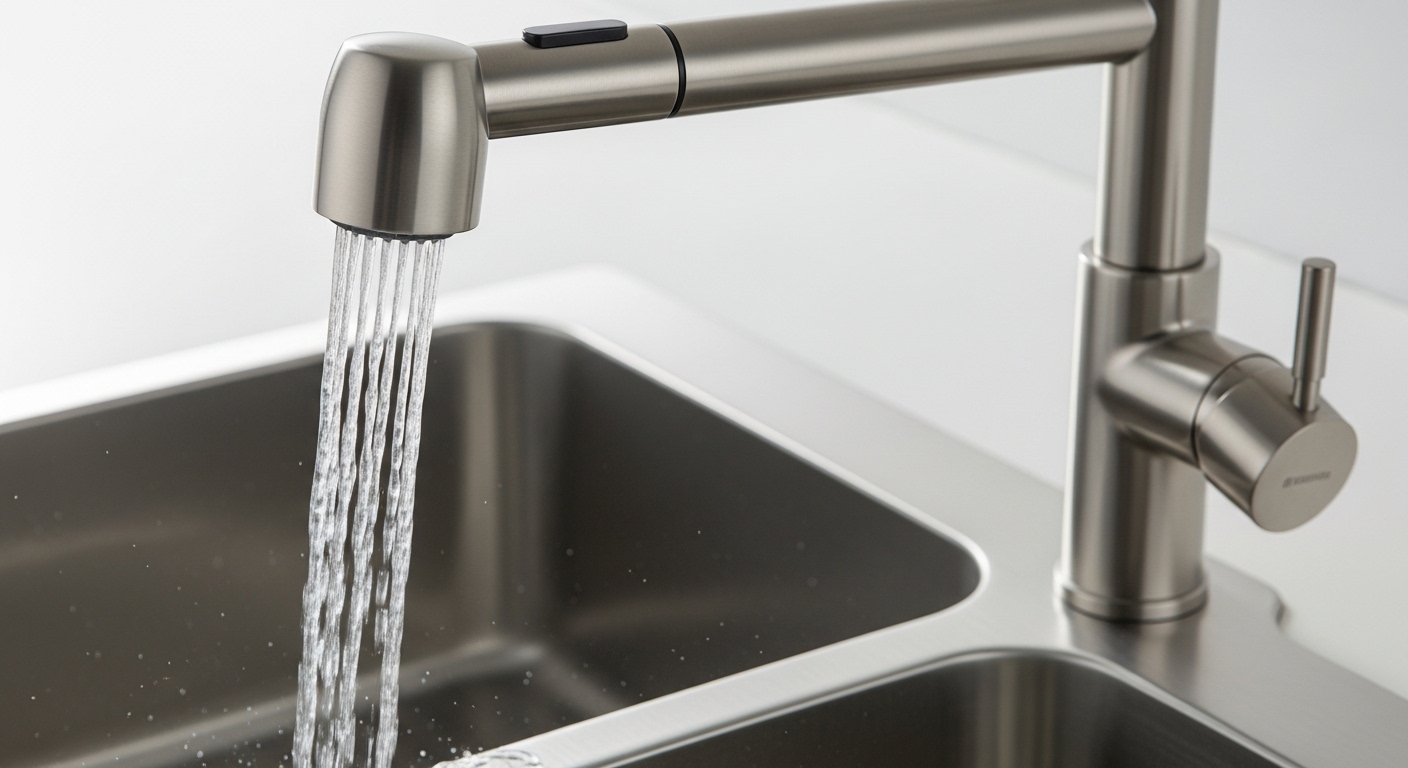
If you’ve spent any time washing oversized pans or rinsing a sink full of dishes, you already know why a pull out kitchen faucet is one of the most practical upgrades you can make at the sink. Instead of a fixed spout, the spray head detaches and pulls straight toward you on a flexible hose, giving you a long, low reach that’s hard to beat for everyday prep work. It’s a small change in hardware that meaningfully changes how your kitchen functions.
At kesfaucet, we’ve designed and stress-tested kitchen faucets for years, and the pull out style remains one of our most-recommended picks for compact and mid-size kitchens. Below is a complete, no-fluff buying guide so you can choose with confidence.
What Is a Pull Out Kitchen Faucet?
A pull out kitchen faucet has a spray head that you grip and pull horizontally outward, away from the spout, along a retractable hose. When you let go, an internal weight or spring system draws the hose back so the head reseats neatly in the spout.
The defining trait is the direction of travel. The wand comes toward you and out over the sink, rather than dropping down from a tall arch. That makes the pull out design especially friendly for kitchens with a window behind the sink, low-clearance upper cabinets, or shorter users who don’t want to reach up and over a high spout.
How the Pull Out Mechanism Works
Three components do the heavy lifting:
- The spray wand — a compact head, usually with a toggle or button to switch between aerated stream and spray.
- The hose — typically a braided nylon or PEX-lined hose rated for thousands of pull cycles.
- The retraction system — a counterweight clipped to the hose under the sink, or a spring-assisted return, that pulls the wand back into the dock.
Because the wand on a pull out kitchen faucet is lightweight and the spout is short, the docking action tends to be smooth and rarely droops over time the way some tall models can.
Pull Out vs. Pull-Down: Which Spray Style Fits Your Sink?
This is the single most common question buyers ask, so let’s settle it. Both styles give you a detachable wand — the difference is geometry and reach.
| Feature | Pull Out Faucet | Pull-Down Faucet |
|---|---|---|
| Spout height | Low to medium profile | Tall, high-arch |
| Wand travel | Horizontal, toward user | Vertical, downward |
| Best for | Small sinks, window above sink, low cabinets | Deep single-basin sinks, filling tall pots |
| Reach across counter | Excellent — long horizontal pull | Limited — stays near spout |
| Clearance needed | Minimal vertical clearance | Needs open space above |
| Typical hose length | 48–60 inches | 20–30 inches |
| Visual style | Compact, understated | Bold, statement piece |
The short version: if you have a window over your sink, low-hanging cabinets, or a smaller basin, the pull out kitchen faucet is usually the smarter buy. If you have a deep single-bowl sink and frequently fill stockpots, a high-arch pull-down may serve you better. For a deeper breakdown, see our guide on pull-down faucet vs. side sprayer.
Key Specs to Check Before You Buy a Pull Out Kitchen Faucet
Marketing photos won’t tell you whether a faucet fits your sink or your water habits. These numbers will.
Flow Rate (GPM)
Flow rate is measured in gallons per minute. Most modern kitchen faucets sit between 1.5 and 1.8 GPM. A 1.8 GPM faucet feels strong and fills containers quickly; a 1.5 GPM model is more water-efficient and may be required in some regions. If your home already struggles with pressure, read our explainer on how water pressure affects faucet flow before deciding.
Spout Reach and Height
Spout reach is how far the water lands from the base. You want the stream to hit the center of your basin, not the back wall. For a pull out kitchen faucet, height matters less because the wand extends — but still confirm the docked spout clears your soap dispenser and backsplash.
Hole Configuration and Deck Plate
Count the holes in your sink or countertop. Single-hole installation is cleanest, but if you have a three-hole sink, make sure the faucet includes an escutcheon (deck plate) to cover the extra openings. Always confirm fit — our walkthrough on how to check faucet compatibility before buying covers this step by step.
Valve Type
Look for a ceramic disc cartridge. It resists wear, handles hard water better than older rubber-washer designs, and is the standard on quality faucets today.
Hose Length and Material
A 48-to-60-inch braided hose gives you genuine counter reach. Cheaper vinyl hoses kink and crack — braided nylon or a PEX core lasts far longer.
Pull Out Kitchen Faucet Finishes Compared
Finish is where personal taste meets maintenance reality. Here’s how the popular options actually behave in a working kitchen.
| Finish | Look | Fingerprint Resistance | Upkeep |
|---|---|---|---|
| Spot-Resist Stainless | Warm silver, versatile | High | Low — wipe with damp cloth |
| Chrome | Bright, reflective | Low | Shows water spots, easy to polish |
| Matte Black | Modern, bold | Medium | Shows hard-water film; needs gentle cleaners |
| Brushed Gold | Soft, warm, on-trend | High | Low — avoid abrasive pads |
| Brushed Nickel | Warm gray, classic | High | Low |
If you’re leaning toward a darker faucet, our tips on keeping a matte black faucet looking new are worth a read before you commit. And regardless of finish, hard water is the enemy — see how to get rid of calcium buildup on a faucet to keep the spray head clear.
Who Should Buy a Pull Out Kitchen Faucet?
This style isn’t universally best — it’s best for specific situations. You’ll get the most value if:
- You have a window or shelf directly behind your sink that a tall faucet would block.
- Your upper cabinets sit low, leaving little vertical clearance.
- You have a compact or shallow sink where a high arch would splash.
- You frequently rinse items beside the sink — filling a coffee maker, watering plants on the counter, cleaning a cutting board.
- You prefer an understated, low-profile look over a statement faucet.
If none of those apply and you mainly fill tall stockpots in a deep single basin, a pull-down model may suit you better. The right answer depends on your sink, not on which style is trendier.
Installation: What to Expect
Most homeowners can install a pull out kitchen faucet in about an hour with basic tools. The general sequence:
- Shut off the hot and cold supply valves under the sink and open the old faucet to release pressure.
- Disconnect the supply lines and remove the old faucet’s mounting nuts.
- Clean the deck surface, then set the new faucet (with deck plate if needed) and tighten the mounting hardware from below.
- Feed the spray hose down through the spout, connect it to the supply outlet, and attach the counterweight to the hose at the manufacturer’s marked position.
- Reconnect the hot and cold supply lines, turn the water back on, and check every joint for leaks.
- Run water for a minute, then pull the wand out and let it retract a few times to confirm smooth docking.
One tip: position the counterweight exactly where the instructions specify. Place it too high and the wand won’t retract fully; too low and it drags. If retraction ever gets sluggish later, our guide on fixing a faucet that won’t retract applies to pull out models too.
Common Mistakes to Avoid
- Ignoring sink hole count — buying a single-hole faucet for a three-hole sink without a deck plate leaves gaps.
- Overlooking hose length — a short hose defeats the main advantage of the pull out design.
- Skipping the aerator — the aerator controls splash and saves water; don’t remove it permanently.
- Choosing finish on looks alone — match your finish to how much cleaning you’re realistically willing to do.
- Forgetting hard-water care — mineral buildup clogs spray heads faster than anything else.
Care and Longevity
A quality pull out kitchen faucet should last well over a decade. To get there, wipe the spray head dry after heavy use, periodically soak the aerator in white vinegar to dissolve mineral scale, and avoid abrasive scrubbers on any finish. If your home has hard water, that maintenance rhythm matters even more — and a water softener pays for itself in faucet lifespan.
kesfaucet pull out faucets are built with ceramic disc cartridges and braided stainless hoses tested to industry pull-cycle and pressure standards, and they ship with a manufacturer warranty covering the cartridge and finish. Always register your faucet and keep the documentation — it makes any future warranty claim painless.
FAQ
Is a pull out kitchen faucet better than a pull-down?
Neither is universally better. A pull out kitchen faucet wins for small sinks, low cabinets, and windows above the sink because the wand travels horizontally and the spout stays low. A pull-down wins for deep single-basin sinks and filling tall pots. Match the style to your sink and habits.
How long does the hose on a pull out faucet last?
A quality braided nylon or PEX-lined hose is typically rated for tens of thousands of pull cycles and lasts the life of the faucet under normal use. Cheap vinyl hoses kink and fail far sooner, which is why hose material is worth checking before you buy.
Will a pull out faucet work with low water pressure?
Yes, though performance depends on your home’s pressure. The aerator and spray modes are designed to feel strong even at 1.5–1.8 GPM, but if your pressure is already weak, address that first. Our article on how water pressure affects faucet flow explains the causes.
Can I install a pull out kitchen faucet myself?
Most homeowners can. It takes about an hour with an adjustable wrench and a basin wrench. The key steps are shutting off the supply valves, mounting the faucet, connecting the spray hose, and positioning the counterweight correctly so the wand retracts smoothly.
Why won’t my pull out faucet wand retract fully?
The most common cause is a counterweight placed in the wrong spot on the hose, or a hose snagging on pipes or the garbage disposal under the sink. Reposition the weight per the instructions and clear the hose path so it can travel freely.
What finish is easiest to maintain on a pull out faucet?
Spot-resist stainless, brushed nickel, and brushed gold hide fingerprints and water spots best and only need a damp-cloth wipe. Chrome looks bright but shows spots, and matte black shows hard-water film — both are fine choices if you don’t mind occasional cleaning.
Author Note
This guide was written by the kesfaucet product content team, drawing on hands-on testing of kitchen faucet mechanisms, hose durability, and finish wear. kesfaucet has manufactured and sold faucets and bathroom fixtures for years, and every pull out model we ship is tested against industry standards for flow, pressure, and pull-cycle endurance before it reaches your kitchen. Our goal here is simple: help you buy the right faucet once.
您好!请登录