 Kes Faucets




Why Your Faucet Stops Working Suddenly (And How to Fix It)
浏览次数:421 分类:Blogs
You turn on the faucet—and nothing happens. No water, no pressure, or just a weak trickle. A faucet that suddenly stops working can be confusing and frustrating, especially if it was working perfectly moments before.
The good news is that most of these issues have simple, fixable causes. From clogged aerators to shut-off valve problems, the solution is often easier than you think. This guide will walk you through the most common reasons and how to fix them step by step.
1. Clogged Aerator
The aerator is the small screen at the tip of your faucet. It mixes air with water to create a smooth flow—but it can easily get clogged with debris or mineral buildup.
Signs:
- Weak or no water flow
- Water coming out unevenly
- Problem affects only one faucet
Fix:
- Unscrew the aerator (use pliers if needed)
- Rinse it under water
- Soak in vinegar for 10–15 minutes to remove buildup
- Reinstall and test
This is one of the most common and easiest fixes.
2. Shut-Off Valves Are Closed
Under your sink are shut-off valves for hot and cold water. If they are partially or fully closed, your faucet won’t work properly.
Signs:
- No water flow at all
- Only hot or cold water working
- Issue started after plumbing work
Fix:
- Check both valves under the sink
- Turn them counterclockwise to fully open
- Test the faucet again
Sometimes valves are accidentally turned off during cleaning or repairs.
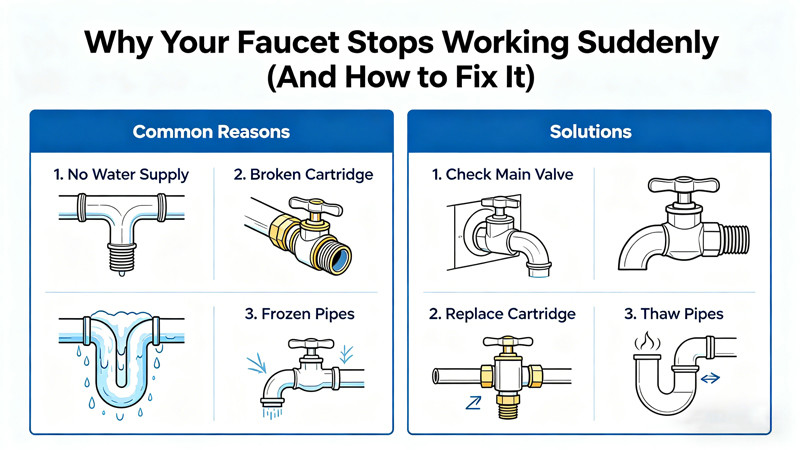
3. Cartridge Failure
The cartridge controls water flow and temperature. If it becomes clogged, damaged, or worn out, it can block water completely.
Signs:
- Faucet handle moves normally, but no water comes out
- Sudden loss of flow
- No visible external leaks
Fix:
- Turn off water supply
- Remove the handle and access the cartridge
- Clean or replace it
Cartridges are replaceable and relatively inexpensive.
4. Blocked Water Supply Lines
The flexible hoses under your sink supply water to the faucet. If they become blocked or kinked, water flow can stop.
Signs:
- No water or very low pressure
- Issue affects only one faucet
- Hoses appear bent or twisted
Fix:
- Inspect supply lines for kinks
- Disconnect and flush them if needed
- Replace damaged hoses
Proper alignment is important for consistent water flow.
5. Debris in the Plumbing System
After plumbing work or water supply interruptions, debris can enter your pipes and block faucet components.
Signs:
- Sudden drop in water flow
- Faucet worked fine before recent plumbing changes
- Multiple fixtures may be affected
Fix:
- Remove and clean the aerator
- Flush the faucet by running water without the aerator
- Clean internal parts if necessary
Flushing often clears out the blockage.
6. Water Supply Issue
Sometimes the problem isn’t your faucet—it’s your water supply.
Signs:
- No water in multiple faucets
- Neighbors experiencing the same issue
- Water stopped suddenly without warning
Fix:
- Check with your water provider
- Look for local service outages
- Wait for supply to be restored
This is especially common during maintenance or repairs.
7. Frozen Pipes
In colder climates, pipes can freeze and block water flow.
Signs:
- No water during cold weather
- Frost visible on exposed pipes
- Only certain faucets affected
Fix:
- Gently warm pipes using a hairdryer or heating pad
- Open the faucet slightly while thawing
- Never use open flames
Prevent future freezing by insulating pipes.
8. Faulty Faucet Valve or Internal Damage
Internal components like valves can fail over time, especially in older faucets.
Signs:
- No water despite proper supply
- Handle feels loose or unusual
- Problem persists after basic checks
Fix:
- Disassemble the faucet
- Inspect internal parts
- Replace damaged components or the entire faucet
If multiple parts are worn, replacement may be the better option.
9. Water Pressure Problems
Low or inconsistent water pressure can make it seem like the faucet isn’t working.
Signs:
- Weak flow rather than no flow
- Issue affects multiple fixtures
- Pressure fluctuates
Fix:
- Check your home’s pressure regulator
- Inspect for leaks in plumbing
- Clean aerators and cartridges
Proper pressure is essential for normal faucet operation.
10. Recently Installed Faucet Issues
If your faucet is new, the problem may be related to installation.
Possible causes:
- Debris left in lines
- Incorrectly installed cartridge
- Tight or misaligned connections
Fix:
- Recheck installation steps
- Flush the system
- Ensure all parts are properly aligned
New faucets sometimes need minor adjustments after installation.
Step-by-Step Troubleshooting Checklist
If your faucet stops working, follow this order:
- Check other faucets in your home
- Inspect shut-off valves
- Clean the aerator
- Check water supply lines
- Inspect and clean the cartridge
- Look for external issues (water outage or frozen pipes)
This systematic approach helps you identify the problem quickly.
When to Call a Professional
While many issues are DIY-friendly, you should call a plumber if:
- Multiple fixtures have no water
- Pipes are damaged or leaking
- You suspect major plumbing issues
- Repairs don’t fix the problem
Professional help ensures the issue is resolved safely and correctly.
Final Thoughts
A faucet that suddenly stops working can feel like a major problem, but in most cases, the cause is simple—like a clogged aerator, closed valve, or minor blockage.
By checking the basics first and working through each possible cause, you can often restore water flow in minutes without replacing the faucet.
Understanding how your faucet works not only helps you fix problems faster but also prevents future issues. With regular maintenance and a little troubleshooting knowledge, you can keep your faucets running smoothly and reliably every day.
您好!请登录