 Kes Faucets








Flynt Kitchen Faucet Reviews: Is It Actually Worth Buying in 2026?
浏览次数:62 分类:Compare
Here is the complete, publish-ready HTML article:
“`html
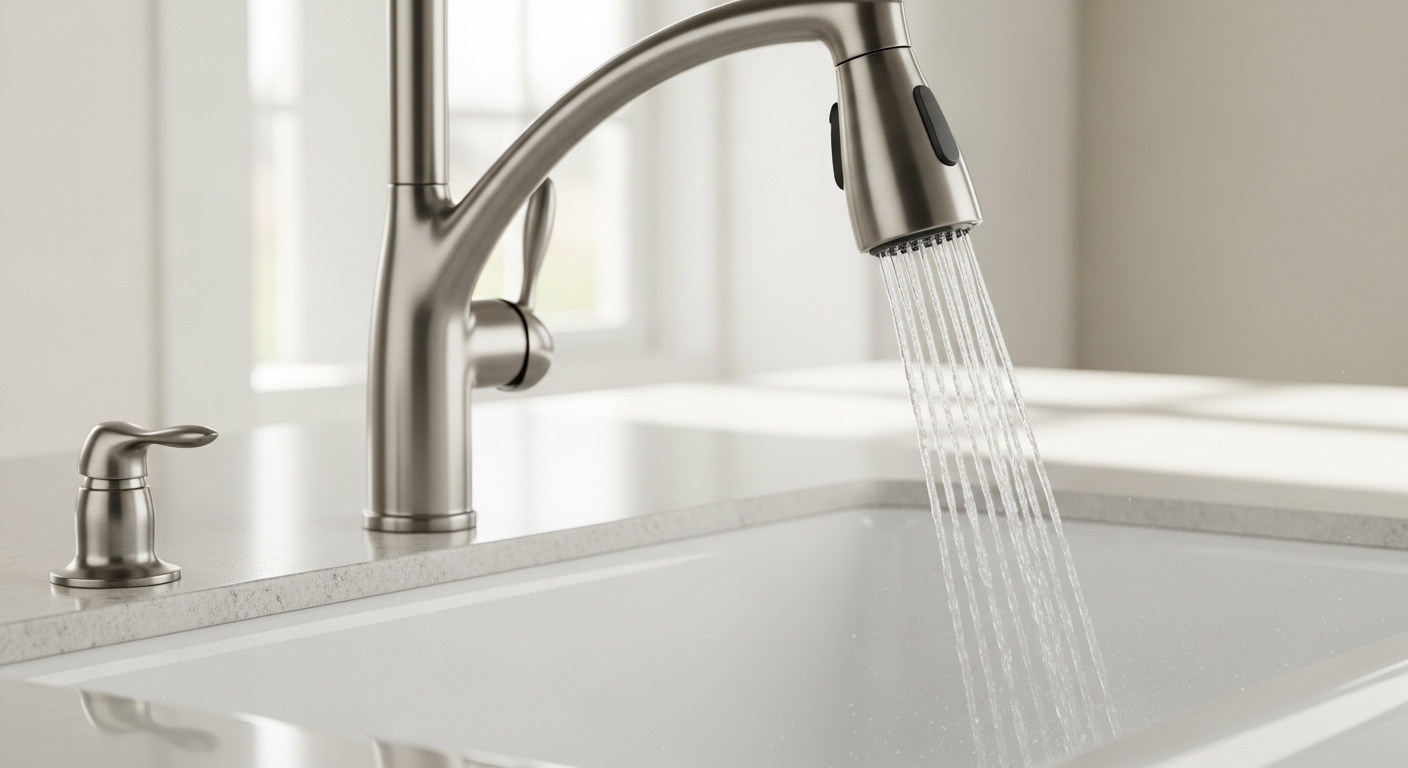
If you’ve been reading flynt kitchen faucet reviews trying to figure out whether it’s a hidden gem or a faucet you’ll regret in two years, here’s the honest breakdown. Flynt is one of those value-focused kitchen faucet lines you see on Amazon and big-box sites — clean modern styling, spring-neck and pull-down models, prices that undercut the big names by 30–50%. The question isn’t really “is it good?” It’s “good for what, and good compared to what?” That’s what this comparison answers, with real specs, real trade-offs, and where a brand like KES fits in the same conversation.
Are Flynt kitchen faucets actually good, or just cheap?
Flynt kitchen faucets are genuinely decent for the price — not “cheap” in the throwaway sense, but “value” in the sense that you’re trading long-term parts support and heavy-duty internals for a lower sticker price. For a typical homeowner replacing a faucet in a rental, a starter home, or a secondary kitchen, that trade is usually worth it.
Here’s what you actually get. Most Flynt models use a ceramic-disc cartridge, which is the same core valve technology found in premium faucets — it’s the part that controls flow and temperature, and ceramic discs resist wear far better than old rubber-washer designs. The bodies are typically brass or a brass-zinc mix under the finish, and the pull-down hoses are nylon-braided with a magnetic or weighted dock to snap the spray head back into place.
Where Flynt saves money is in the details you don’t see on day one: thinner wall castings, a lighter-duty sprayer diverter, and finishes applied with less costly processes than the PVD (physical vapor deposition) coatings on flagship faucets. None of that makes it bad — it makes it a 5-to-8-year faucet rather than a 20-year one. For a lot of buyers, that’s exactly the right amount of faucet.
What do real owners say in Flynt kitchen faucet reviews?
Across owner reviews, the pattern is consistent: people love the look and the install, and complaints cluster around the sprayer and long-term finish. That’s a very normal profile for a value faucet, and it tells you where to pay attention.
The recurring positives and negatives look like this:
- Praised: modern styling that looks more expensive than it costs, easy single-person DIY installation, smooth handle action out of the box, and a spray/stream toggle that feels satisfying.
- Praised: the pull-down hose retracts cleanly on most units thanks to the docking magnet or weight.
- Criticized: some units develop a weak or wandering sprayer diverter after a year or two, so the spray mode loses pressure.
- Criticized: a minority report finish spotting or dulling on matte black and brushed-gold models in hard-water areas.
- Criticized: replacement cartridges and spray heads can be slow to source — you often order from the seller rather than grabbing one at a hardware store.
That last point matters more than people think. With Moen or Delta, a leaking cartridge is a $15 part you buy locally and swap in ten minutes. With a smaller brand, a stuck cartridge can mean waiting on shipping — which is why parts availability shows up in almost every serious comparison.
How does Flynt compare to KES, Moen, and Delta under $200?
Under $200, Flynt competes closely with KES on price and styling, while Moen and Delta win on parts availability and long-term support but cost more for equivalent features. The right pick depends on whether you optimize for upfront value or lifetime serviceability.
Here’s a side-by-side on the things that actually decide the purchase:
| Factor | Flynt | KES | Moen (entry) | Delta (entry) |
|---|---|---|---|---|
| Typical price | $90–$220 | $70–$200 | $150–$300 | $140–$300 |
| Valve type | Ceramic disc | Ceramic disc | Ceramic / 1255 cartridge | Ceramic / DIAMOND Seal |
| Body material | Brass / brass-zinc | Brass / stainless (SUS304 on many models) | Brass / zinc | Brass / zinc |
| Local parts availability | Limited (order online) | Limited (order online) | Excellent (in most stores) | Excellent (in most stores) |
| Warranty | Limited (varies by seller) | Limited lifetime on many models | Limited lifetime | Limited lifetime |
| Best for | Budget style, secondary kitchens | Budget style, small sinks, DIY | Set-and-forget, easy repairs | Set-and-forget, easy repairs |
The headline: Flynt and KES are the value plays, Moen and Delta are the serviceability plays. If you’re the type who wants to walk into a store and buy a $15 cartridge on a Saturday, the big two are worth the premium. If you’d rather put that money toward a nicer finish or a better sprayer and you’re comfortable ordering a part online once every few years, Flynt and KES both make sense. If you’re stuck between the two big names specifically, our breakdown of whether Delta or Kohler is the better buy walks through that decision in detail.
Which Flynt kitchen faucet is best for a small kitchen or bar sink?
For a small kitchen or bar sink, choose a Flynt single-handle model with a lower spout height (under ~14 inches) and a compact pull-down or spring-neck head — a tall commercial-style gooseneck will overwhelm a small basin and splash. Match the spout reach to your sink width so the stream lands in the drain, not on the edge.
Sizing is where most people go wrong with any faucet, Flynt included. A dramatic spring-coil faucet looks incredible in photos and terrible over a 22-inch bar sink, because the arc is built for a deep 30-inch basin. The fix is boring but reliable: measure your sink’s front-to-back depth and pick a spout whose reach puts the water in the center of the bowl.
- Bar or prep sink: a compact single-handle Flynt with a 12–14″ spout and a swiveling head is ideal.
- Standard small kitchen: a mid-height pull-down (14–16″) gives you rinsing flexibility without towering over the counter.
- Low window behind sink: a spring-neck faucet may hit the sill — measure your clearance first, or go with a fixed gooseneck.
If a compact sink is your situation, our guide to the best kitchen faucet for a small kitchen covers spout height and reach in more depth, and if you’re specifically outfitting a prep zone, the bar faucet vs. kitchen faucet comparison explains when a smaller dedicated faucet beats a full-size one.
Do Flynt faucets hold up in hard water, and how do you keep the finish nice?
Flynt faucets hold up acceptably in hard water if you wipe them dry and clean the aerator periodically, but hard water is the single biggest threat to both the finish and the sprayer on any value faucet. Mineral scale dulls finishes, clogs aerators, and gums up the spray-mode diverter — so a little maintenance goes a long way.
The good news is the fixes are simple and cheap:
- Wipe it dry after heavy use. Standing water is what leaves spots. A quick dry cloth beats any coating for keeping a finish looking new.
- Unscrew and soak the aerator in white vinegar every few months to clear scale. A clogged aerator is the #1 cause of “my new faucet lost pressure.”
- Avoid abrasive pads and harsh cleaners on matte black and gold finishes — they micro-scratch and accelerate dulling. Mild soap and water only.
- Consider a point-of-use filter if your water is genuinely hard; it protects the cartridge and aerator, not just your drinking water.
If pressure drops on the spray mode specifically, the aerator or the sprayer head is almost always the culprit before the cartridge is. Our explainer on what a sink aerator actually does shows how to clean and reseat one, which resolves a surprising share of “faulty faucet” complaints across every brand — not just Flynt.
Is Flynt easy to install yourself, or do you need a plumber?
Yes — Flynt kitchen faucets are designed for DIY installation, and most single-handle models take a confident homeowner 30–60 minutes with basic tools and no plumber. The deck-mount design, flexible supply lines, and quick-connect hose make it one of the friendlier jobs in a kitchen.
The typical process: shut off the hot and cold supply valves under the sink, disconnect and remove the old faucet, drop the new Flynt through the mounting hole, secure it from below with the included nut and bracket, connect the braided supply lines to your shut-offs, snap the pull-down hose to the spray head, then turn the water back on and check for leaks. The two things that trip people up are over-tightening (which cracks fittings) and forgetting to remove the aerator to flush debris on first run.
A few tips that make it smoother: keep a bucket and towel under the sink for residual water, use plumber’s tape on threaded connections that aren’t pre-gasketed, and hand-tighten plus a quarter turn rather than cranking. If you’re newer to faucet work, the same fundamentals apply across brands — our walkthrough on fixing a dripping lever tap step by step is a good primer on cartridge and handle basics before you start.
So who should actually buy a Flynt kitchen faucet?
Buy a Flynt if you want a good-looking, easy-to-install faucet under $200 for a kitchen you’re not planning to keep forever — a rental, a flip, a starter home, or a secondary/basement kitchen. Skip it if this is your forever kitchen and you’d be genuinely annoyed waiting on a mail-order cartridge in year six.
Think of it as tiers. If your priority is lowest cost with the best looks, Flynt and KES are both strong, and it comes down to which specific model fits your sink and finish. If your priority is never think about this faucet again, the local-parts convenience of Moen or Delta is worth the extra $50–$100. There’s no wrong answer — there’s just matching the faucet to how long you’ll live with it and how much maintenance you’re willing to do.
One more practical note: when you’re budgeting, remember the faucet is only part of the cost. If you’re paying someone to swap it, labor can equal or exceed the faucet price — our breakdown of how much it costs to replace a kitchen tap in 2026 lays out the real numbers so a “cheap” faucet doesn’t turn into an expensive project.
FAQ
How long do Flynt kitchen faucets last?
With normal use and basic maintenance, expect roughly 5–8 years of trouble-free service from a Flynt kitchen faucet, versus 15–20+ for a premium brand with heavier internals. The ceramic-disc cartridge is durable; the shorter lifespan comes from lighter-duty sprayer parts and finishes, plus the reality that a mail-order-only cartridge often means people replace the whole faucet instead of repairing it.
Are Flynt replacement parts hard to find?
Somewhat, yes. Unlike Moen and Delta, whose cartridges and spray heads are stocked in most hardware stores, Flynt parts usually have to be ordered online from the original seller or the brand. Before you buy, it’s worth confirming the seller stocks replacement cartridges and spray heads — that single factor determines whether a small leak is a ten-minute fix or a full replacement.
Is Flynt or KES the better value kitchen faucet?
They’re close competitors, and it comes down to model specifics. KES offers many stainless-steel (SUS304) bodies and a limited-lifetime warranty on several models, which is a meaningful edge on corrosion resistance and coverage, while Flynt often wins on trendier finish options. Compare the exact two faucets you’re considering on body material, warranty terms, and finish rather than the brand name alone.
Does a Flynt faucet come with a warranty?
Warranty coverage varies by seller and model, and is generally more limited than the “limited lifetime” warranties from major brands. Always check the specific listing before buying, keep your proof of purchase, and confirm what’s covered — finish, cartridge, or both. A clear warranty is one of the strongest signals that a value brand stands behind its product.
Why did my Flynt faucet lose water pressure?
Nine times out of ten it’s a clogged aerator or a scaled-up sprayer head, not a broken cartridge. Unscrew the aerator, soak it in white vinegar to dissolve mineral scale, rinse, and reinstall — pressure usually returns immediately. If both hot and cold are weak and cleaning doesn’t help, check that the supply shut-off valves under the sink are fully open before suspecting the faucet itself.
Can I install a Flynt kitchen faucet without a plumber?
Yes. Flynt faucets are built for DIY and most single-handle deck-mount models install in 30–60 minutes with an adjustable wrench, a basin wrench, and plumber’s tape. Shut off the water, remove the old faucet, mount and secure the new one, connect the braided supply lines, then flush the line with the aerator removed before checking for leaks.
Author note: This review was written by the KES Faucet editorial team, drawing on hands-on faucet installation and testing, aggregated owner feedback, and years of comparing kitchen faucet valves, finishes, and sprayer mechanisms across price tiers. KES Faucet (www.kesfaucet.com) designs and sells kitchen and bathroom fixtures built to standard mounting specs and ceramic-disc valve standards, and we back many of our models with a limited-lifetime warranty. We test faucets against real-world hard-water and daily-use conditions rather than lab-only claims — and we tell you when a competitor is the better buy for your situation.
“`
您好!请登录