 Kes Faucets









How Much Does It Cost to Replace a Kitchen Tap in 2026?
浏览次数:133 分类:Repair
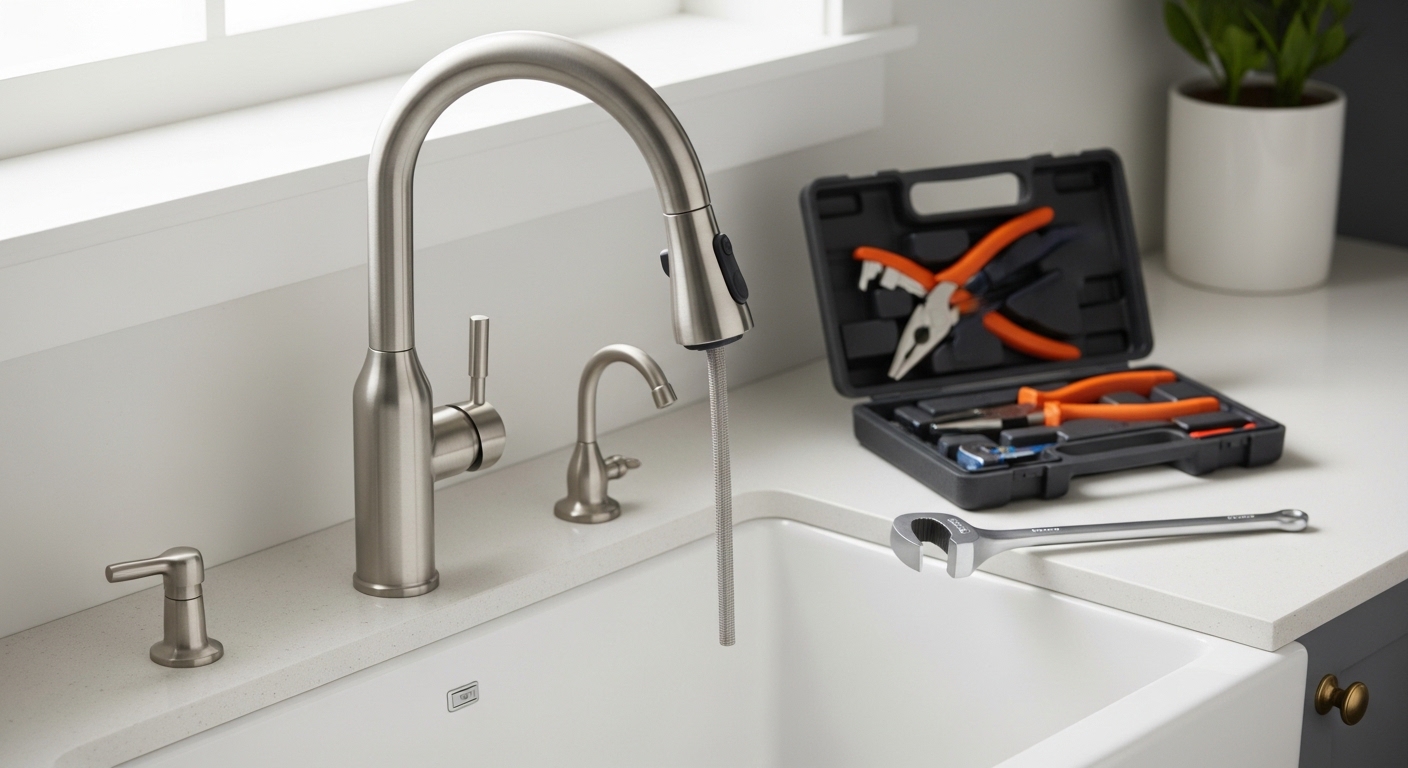
If you’ve been quoted a number that made you wince, you’re not alone — the replace kitchen tap cost swings wildly depending on who does the work, what shape your existing plumbing is in, and which faucet you choose. The good news: a standard kitchen tap swap is one of the most predictable, DIY-friendly plumbing jobs in the house. Below, we break the real numbers down line by line, show you exactly where the money goes, and tell you when it’s worth paying a pro versus grabbing a basin wrench yourself.
This guide is written for the person standing at the sink with a drippy, wobbly, or just plain dated faucet, trying to figure out the honest total before they commit. No vague ranges, no upselling — just the actual costs we see in 2026.
What’s the average cost to replace a kitchen tap in 2026?
The average all-in cost to replace a kitchen tap in 2026 is $150 to $450 when you hire a plumber, and $80 to $280 if you do it yourself. The single biggest variable is labor: a professional install adds $100–$250 on top of the faucet price, while DIY drops that to nearly zero.
Here’s how the total breaks down in practice. The faucet itself is the largest fixed cost, the small parts (supply lines, plumber’s tape, maybe a new shut-off valve) are cheap, and labor is where the spread really lives.
| Cost component | DIY | Hire a plumber |
|---|---|---|
| Faucet (mid-range) | $80–$250 | $80–$250 |
| Supply lines & small parts | $10–$30 | often included |
| Labor (1–2 hrs) | $0 | $100–$250 |
| Disposal of old faucet | $0 | $0–$25 |
| Typical total | $90–$280 | $180–$450+ |
Those numbers assume a like-for-like swap on existing, working shut-off valves. If your valves are seized, your supply lines are corroded, or you’re moving from a one-hole to a three-hole configuration, expect to add $50–$200. We cover those curveballs further down.
How much does a plumber charge just to install a kitchen faucet?
A plumber typically charges $100 to $250 in labor to install a kitchen faucet you’ve already bought, and the job usually takes 45 minutes to 2 hours. Many plumbers bill a flat “faucet swap” rate of around $150, while others charge an hourly rate of $75–$150 with a one-hour minimum.
What pushes labor toward the high end:
- Tight cabinet access — deep sinks and garbage disposals force a plumber to work blind on their back, which takes longer.
- Old, corroded connections — rusted nuts and brittle supply lines that won’t budge can double the time.
- Seized shut-off valves — if the under-sink valves don’t fully close, the plumber may need to replace them, adding $50–$150.
- Adding features — hooking up a side sprayer, soap dispenser, or built-in filter adds connections and minutes.
One money-saving tip: buy the faucet yourself rather than letting the plumber supply it. Plumbers often mark up fixtures 20–50%. Just confirm the model is compatible with your sink before they arrive — our guide on how to check faucet compatibility before buying walks through hole count, deck thickness, and supply-line fit so you don’t end up with a faucet that won’t seat.
Is it cheaper to repair or replace a kitchen tap?
Repairing is cheaper if the problem is a worn cartridge, O-ring, or aerator — those fixes run $10–$40 in parts. But once a faucet is more than 10–15 years old, finishes are flaking, or replacement parts are discontinued, full replacement is the smarter spend because you’re not throwing good money after bad.
A quick decision rule we give customers:
- Drips from the spout? Usually a $15 cartridge or set of O-rings — repair it.
- Weak or sputtering flow? Often just a clogged aerator you can unscrew and soak — nearly free.
- Leaks from the base or under the sink? Could be O-rings, but on an old faucet it’s often the beginning of the end.
- Wobbly, corroded, or you simply hate the look? Replace it.
If your tap suddenly stopped working entirely, don’t assume it’s dead — sometimes the cause is upstream and cheap to fix. Our breakdown of why your faucet stops working suddenly can save you a needless replacement. And if your problem is a pull-down sprayer head that won’t snap back up, that’s almost always a repair, not a replacement — see how to fix a pull-down faucet that won’t retract.
How much does the faucet itself cost by type?
The faucet is the part of the replace kitchen tap cost you have the most control over. Prices range from about $40 for a basic single-handle tap to $400+ for a touchless or commercial-style model. For most kitchens, the $90–$200 mid-range is the sweet spot for durability and features.
| Faucet type | Typical price | Best for |
|---|---|---|
| Single-handle standard | $40–$120 | Budget swaps, rentals, simple kitchens |
| Pull-down sprayer | $90–$250 | Most modern kitchens — best all-rounder |
| Pull-out sprayer | $80–$220 | Small sinks, shallow setups |
| Bridge / two-handle | $150–$400 | Traditional & farmhouse looks |
| Touchless / motion-sensor | $180–$450 | Convenience, hygiene, busy cooks |
If you’re upgrading the style as well as fixing a problem, a pull-down is the most popular choice for good reason — high clearance, a sprayer that docks magnetically, and a clean single-hole look. Our pull-out kitchen faucet buying guide compares pull-out versus pull-down so you pick the head style that actually fits your sink and habits.
A word on the cheap end: a $40 faucet often uses plastic internal components and a lower-grade cartridge, which means you may be repeating this whole job in 3–5 years. Spending $120–$180 on a faucet with a solid brass body and a ceramic-disc cartridge typically buys you 10–15 years and a better warranty — that’s the better cost-per-year math.
Can I replace a kitchen tap myself and save the labor cost?
Yes — for most like-for-like swaps, replacing a kitchen tap is a 1–2 hour DIY job that needs only basic tools, and doing it yourself eliminates the entire $100–$250 labor charge. If your shut-off valves work and you can fit under the sink, you can almost certainly handle this.
Here’s the basic DIY sequence so you know what you’re signing up for:
- Shut off the water at the two under-sink valves and open the tap to release pressure.
- Disconnect the supply lines with an adjustable or basin wrench; keep a towel and bowl handy for drips.
- Loosen the mounting nuts holding the old faucet to the sink — a basin wrench earns its keep here.
- Lift out the old faucet and clean the deck of old gunk or sealant.
- Drop in the new faucet, seat the gasket, and tighten the mounting hardware from below.
- Reconnect supply lines (use new braided stainless lines if yours are old), wrapping threads with plumber’s tape.
- Turn the water back on slowly and check every joint for leaks before you call it done.
The tools you’ll likely need: an adjustable wrench, a basin wrench (~$15, the hero tool for tight spots), plumber’s tape, and a flashlight. Total DIY out-of-pocket beyond the faucet is usually under $30.
The one thing that trips up first-timers is a corroded or stuck shut-off valve. If your valve won’t fully close, you’ll need to shut off the home’s main supply and consider replacing the valve — a job that’s still DIY-able but pushes some people toward calling a plumber.
What hidden costs catch people off guard?
The faucet and labor are the headline numbers, but several smaller line items quietly inflate the real replace kitchen tap cost. The most common surprise is needing new shut-off valves or supply lines that the old faucet was hiding.
- New shut-off valves: $8–$15 each in parts, or $50–$150 installed if you hire out.
- New braided supply lines: $8–$15 per pair — always replace old rubber ones during a swap.
- Hole-count mismatch: Going from a 3-hole to a 1-hole faucet needs a deck plate ($15–$40); going the other way may not be possible without a new sink.
- Garbage disposal in the way: Adds labor time and awkwardness, sometimes a small surcharge.
- Sink or countertop damage revealed once the old faucet comes off — rare, but worth knowing.
None of these are dealbreakers, but budgeting an extra $40–$100 cushion keeps the project from feeling like a surprise. If you’re matching the new tap to other fixtures, it’s also worth a quick read on whether you can mix metals and finishes across your kitchen and bath before you buy — a $0 decision that saves regret.
Does a more expensive faucet actually save money over time?
Often, yes. A $150 faucet with a solid brass body, ceramic-disc cartridge, and a lifetime warranty frequently outlasts three $50 plastic-bodied taps. When you factor in repeat replacement labor, the “expensive” faucet can be the cheaper choice over a 15-year window.
Think in cost-per-year, not sticker price. A $60 faucet that fails in 4 years costs $15/year just in hardware — before labor. A $160 faucet that lasts 15 years costs under $11/year and you avoid two extra installs. The quality tiers that matter most are the cartridge (ceramic disc beats compression or ball valves for longevity) and the body material (brass over zinc-alloy or plastic).
Finish durability matters too. A quality physical-vapor-deposition (PVD) finish resists scratching and tarnish far better than cheap electroplating, which is why mid-range faucets keep looking new for years longer.
FAQ
How much does it cost to replace a kitchen tap in 2026?
Expect $150–$450 total with a plumber (faucet plus $100–$250 labor) or $80–$280 if you DIY. A like-for-like swap on working shut-off valves sits at the low end; corroded connections or added features push it higher.
How long does it take to replace a kitchen faucet?
A straightforward swap takes 45 minutes to 2 hours. First-time DIYers should budget 2–3 hours, mostly because of tight under-sink access and stubborn old nuts. A pro doing a clean replacement is often done in under an hour.
Do I need a plumber to replace a kitchen tap?
No — most kitchen tap replacements are DIY-friendly with a basin wrench and basic tools. Call a plumber if your shut-off valves are seized, your supply lines are corroded shut, or you’re changing the sink’s hole configuration and aren’t comfortable working under the cabinet.
What tools do I need to replace a kitchen faucet myself?
An adjustable wrench, a basin wrench (about $15 and essential for reaching mounting nuts), plumber’s tape, new braided supply lines, a flashlight, and a towel. That’s roughly $25–$35 in tools and parts beyond the faucet itself.
Should I replace the supply lines and shut-off valves at the same time?
Always replace old rubber supply lines — they’re cheap ($8–$15) and the main cause of under-sink leaks. Replace shut-off valves only if they don’t fully close or are visibly corroded; new valves run $8–$15 in parts or $50–$150 installed.
Why is my new faucet still dripping after I replaced it?
Usually it’s an under-tightened or over-tightened connection, a missing gasket, or plumber’s tape applied in the wrong direction. Shut the water off, recheck each joint, and make sure the supply-line washers are seated. If the drip is from the spout itself, the cartridge may have been damaged during install.
The bottom line on kitchen tap replacement cost
Replacing a kitchen tap is one of the few plumbing projects where the costs are genuinely predictable. Budget $150–$450 for a professional job or $80–$280 to do it yourself, spend a little more on a brass-bodied faucet with a ceramic cartridge, and replace the supply lines while you’re under there. Do that, and you’ll get a leak-free tap that lasts a decade or more — and you’ll know exactly where every dollar went.
About the author & KES: This guide was written by the product and support team at kesfaucet, who field real customer installation and pricing questions every week. KES has manufactured kitchen and bathroom faucets for over a decade, and our fixtures are built and tested to meet U.S. plumbing standards (cUPC certification and lead-free compliance). Most KES kitchen faucets ship with a limited lifetime warranty on the finish and cartridge, because a faucet you only buy once is the best value of all. Pricing reflects U.S. averages observed in early 2026 and will vary by region and by individual contractor.
您好!请登录