 Kes Faucets








What Is a Chrome Tap Connector and Which One Should You Actually Buy?
浏览次数:177 分类:Product
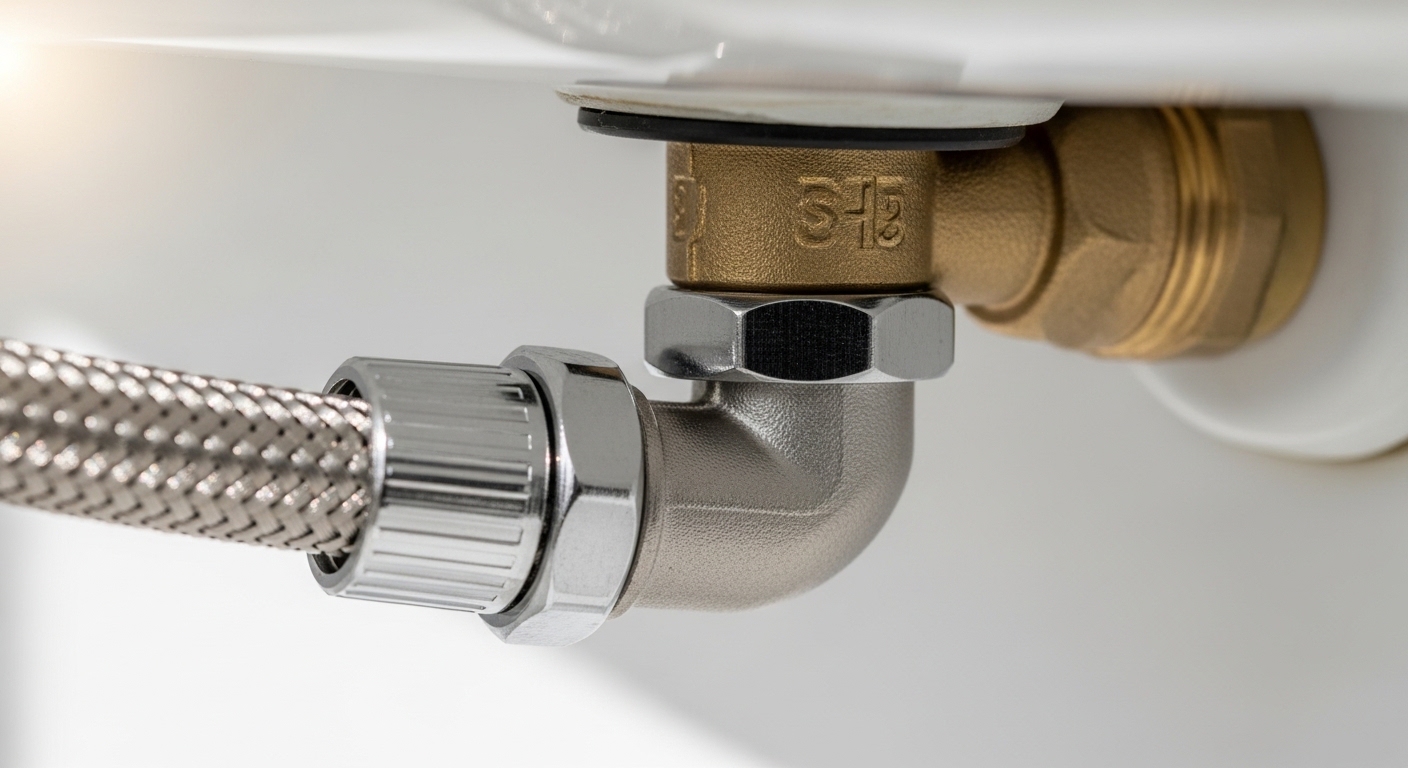
If you’ve ever crouched under a sink with a flashlight wondering why the supply line to your faucet looks like a shiny silver snake, you’re looking at a chrome tap connector. It’s one of the least glamorous parts in your plumbing, but it’s also one of the most failure-prone — and the cheapest one in the bin is almost never the right one. This guide cuts through the spec-sheet noise and tells you exactly what to look for, what to avoid, and what a fair price actually is in 2026.
At kesfaucet, we ship hundreds of thousands of faucet installs a year, and roughly 1 in 12 warranty claims we see has nothing to do with the faucet itself — it’s the connector. So this is a topic we care about more than most.
What exactly is a chrome tap connector, and how is it different from a regular supply line?
A chrome tap connector is a short flexible supply hose with a polished chrome finish, designed to carry pressurized hot or cold water from your shut-off (angle stop) valve up to the inlet tail of a tap, mixer, or basin faucet. The “chrome” part is purely about the outer sleeve: underneath that mirror finish is either a braided stainless steel jacket or a smooth PEX/EPDM core wrapped in a chromed copper or stainless tube.
The difference between a chrome tap connector and a generic supply line comes down to three things:
- Appearance. Chrome connectors are designed to be seen. If your sink has open shelving, a pedestal, a wall-mount, or a glass vanity, you don’t want a yellow PVC braid showing. Chrome blends with the angle stop and faucet tailpiece.
- Fitting profile. Most chrome tap connectors are sold in the European BSP convention (1/2″ or 3/4″ female swivel on the faucet end), but US-market versions use 3/8″ compression or 1/2″ FIP on the valve end. Always check both ends before buying.
- Length and rigidity. True “tap connectors” are short (usually 300mm, 500mm, or 600mm) and somewhat rigid so they sit cleanly against the wall. Generic faucet supply lines come in longer, floppier formats.
If your install is hidden inside a cabinet and you don’t care how it looks, a standard braided line works fine. If anything is visible — or if you’re matching a chrome or polished-nickel faucet — a chrome tap connector is the right part.
What size chrome tap connector do I need for a standard bathroom or kitchen faucet?
For 95% of US residential installs, you need a 3/8″ compression × 1/2″ FIP chrome tap connector, 16″ to 20″ long. For UK/EU-spec fittings or imported European faucets, you need 15mm compression × 1/2″ BSP female swivel, 300–500mm long. Measure twice — the wrong thread will not seal no matter how hard you crank it.
Here’s how to figure out your size in about 60 seconds:
- Look at your angle stop valve outlet. In North America, it’s almost always 3/8″ compression (a small barrel with a ferrule). In the UK/EU and much of Asia, it’s typically a 15mm copper compression stub or a 1/2″ BSP male thread.
- Look at your faucet’s inlet tailpiece. Modern single-hole bathroom faucets usually have an M10 stud or a 3/8″ compression tail. Kitchen faucets and most two-handle widespread sets use 1/2″ male threads.
- Measure the distance, then add 4–6 inches of slack. A chrome tap connector should never be pulled tight, and it should never loop into a tight S-curve either. Both shorten its life.
If you’re not 100% sure your new faucet will mate with the supply you have, walk through our quick checklist on how to check faucet compatibility before buying before you order anything.
Braided stainless vs. smooth chrome tube vs. PEX-core — which type actually lasts?
Braided stainless steel with a chrome sleeve lasts longest in real-world conditions — typically 8–12 years before the EPDM washers harden. Smooth chrome tube connectors look cleaner but kink easily and fail at the bend. PEX-core chrome connectors are the cheapest and the most likely to balloon or burst under sustained high pressure.
This is the choice that matters most, and it’s where the price spread comes from. Here’s a straight comparison based on what we see come back through warranty and what independent testing labs (WRAS, NSF, KIWA) typically certify:
| Type | Typical Price (USD) | Realistic Lifespan | Max Working Pressure | Best Use Case |
|---|---|---|---|---|
| Braided stainless, chrome sleeve | $10 – $25 | 8 – 12 years | 145 psi (10 bar) | Any visible or high-pressure install |
| Smooth chrome copper tube | $6 – $14 | 10 – 15 years if undisturbed | 230 psi (16 bar) | Wall-mount faucets where the line is straight |
| PEX-core chrome | $3 – $8 | 3 – 6 years | 90 psi (6 bar) | Temporary or rental fixes only |
| Nylon-braided (non-chrome) | $4 – $10 | 5 – 8 years | 125 psi (8.5 bar) | Inside cabinets, not visible |
A practical rule: if you live in a place with municipal water pressure above 70 psi (and a lot of US homes hit 80+ psi at the meter), do not buy the PEX-core option. The braided stainless with chrome sleeve is the safe default, and it’s what we spec on our own factory test rigs. Your incoming pressure also affects how every part downstream behaves — if you’re curious why faucets sometimes sputter or trickle, our breakdown of how water pressure affects faucet flow explains the full chain.
How do I install a chrome tap connector without leaks?
Shut off the water, hand-tighten both ends until snug, then turn each compression nut exactly one-quarter to one-half turn with a wrench — no more. Open the faucet, restore water slowly, and check for weeping. Over-tightening is the #1 cause of leaks, not under-tightening.
The full process, the way a pro does it:
- Close the angle stop under the sink and open the faucet to bleed the line. A small bowl under the connector catches the cup or two of water that drains out.
- Inspect the old washer seats. If you see green oxidation or pitting on the brass faces of the valve or tailpiece, clean them gently with a Scotch-Brite pad. A new connector won’t seal against a corroded face.
- Check the new connector’s washers. Good chrome tap connectors ship with captive EPDM washers already installed in the swivel nut. Don’t add Teflon tape to a washered swivel joint — it can hold the washer off the seat and actually cause a leak.
- Thread by hand first. Both ends should spin on freely for at least 3 full turns. If they don’t, your threads are cross-threaded or mismatched — stop and recheck.
- Snug, then quarter-turn. Hand-tight, then 1/4 to 1/2 turn with an adjustable wrench. The chrome finish marks easily, so wrap a strip of electrical tape around the nut or use a wrench with a soft jaw.
- Pressurize slowly. Open the angle stop a quarter turn, wait 30 seconds, then open fully. Dry the connector with a paper towel and watch the joints for 2 full minutes. Any bead of water means stop and redo it.
If you’re doing this as part of a larger swap, take a look at our walkthrough on how to replace an old tub faucet — many of the same connector principles apply to tub installs, just with slightly larger fittings.
What chrome tap connector is best for hard water areas?
In hard water regions (anything above 7 grains per gallon / 120 ppm), pick a braided stainless connector with a 304 or 316 stainless braid and EPDM (not NBR rubber) washers. Avoid PEX-core types — scale buildup inside soft PEX can balloon the lining over time.
Hard water doesn’t actually damage chrome plating on the outside very fast — chrome is one of the better finishes for scale resistance. The problem is the inside of the hose. Calcium and magnesium deposits accumulate at the connector’s compression joints, and after 5–6 years they can crystallize enough to crack a poorly-made nylon braid. Stainless braid handles this without complaint.
If you’re not sure what kind of water you have, the difference is bigger than most people realize. Our explainer on hard water vs. soft water walks through how to test it at home and how it affects every fixture in your house.
Quick checklist for hard water buyers
- 304 or 316 stainless braid (not 201 stainless — it’s cheaper but rusts).
- EPDM washer rated to at least 100°C / 212°F.
- Chrome sleeve at least 0.5mm thick — thin chrome flakes off near the nuts within a year.
- WRAS, NSF/ANSI 61, or KIWA certification stamped on the hose collar.
How long does a chrome tap connector actually last, and when should I replace it?
A quality chrome tap connector should last 8–10 years in normal use. Replace it on sight if you see rust spots on the braid, green corrosion on the nuts, a bulge anywhere along the hose, or any moisture at the connection. Many plumbers recommend proactive replacement every time you swap a faucet, regardless of age — it’s a $15 part protecting a $5,000 cabinet.
Watch for these specific failure signs:
- Rust pinpricks on the braid. Once the outer braid starts rusting, the stainless wires inside are corroding too. Pinhole leaks follow within months.
- A “tacky” feel to the chrome sleeve. This means the chrome layer is delaminating from the underlying tube — it’ll start flaking soon.
- Stiffness when you bend it. A new connector flexes smoothly. An old one resists bending because the internal liner has hardened. That’s the precursor to a split.
- Drip marks below the nut. Even a single dried mineral streak under a compression nut means it weeps under pressure. Don’t ignore it.
If your faucet starts behaving strangely — flow drops, pressure jumps, water hammers when you turn it off — the connector might not be the only culprit, but it’s worth checking before you tear into the valve cartridge. We cover the full diagnostic flow in why your faucet stops working suddenly.
Are expensive chrome tap connectors actually worth the price difference?
Yes, but only up to a point. The jump from a $4 PEX-core connector to a $12 braided stainless is the single best $8 you’ll ever spend on plumbing. Going from $12 to $25 buys you a thicker chrome sleeve, better washers, and a longer warranty — useful for visible installs, but not necessary inside a closed cabinet.
Here’s the value math, based on what we see in the field:
| Price Tier | What You’re Buying | Worth It? |
|---|---|---|
| Under $5 | Thin PEX core, painted “chrome” coating, no certification | No — false economy |
| $8 – $15 | Braided 304 stainless, EPDM washers, NSF or WRAS certified | Yes — the sweet spot |
| $15 – $30 | Thicker chrome sleeve, 316 stainless braid, 10-year warranty | Yes if visible or high-pressure |
| $30+ | Designer “exposed” connectors, often in matte or polished nickel as well | Only for show plumbing (wall-mounts, exposed mixers) |
If you’re outfitting a whole house, buy a 10-pack of mid-tier braided stainless connectors and use them everywhere — kitchen, bath, laundry, ice maker. Buying matched connectors keeps your install times down and means you only need to remember one torque spec.
Do I need to match my chrome tap connector to my faucet finish?
Only if the connector will be visible. Inside a vanity cabinet, nobody cares. For wall-mounted faucets, pedestal sinks, vessel sinks, or any setup where you can see the supply line, match the finish to the faucet or pick a deliberately contrasting accent. Mismatched visible finishes look like a mistake, even when they’re not.
The good news: chrome is the most flexible finish to match against. It pairs cleanly with polished nickel, brushed nickel, stainless, and even most matte black setups. The trickier matches are warmer finishes — if you’re running champagne bronze or oil-rubbed bronze faucets, a chrome connector will read as out-of-place. For those, look for connectors in matching finishes from the same family. We’ve written separately about the broader rules of mixing finishes in can you mismatch faucets, which covers when a contrast is intentional vs. when it just looks unfinished.
One thing buyers often overlook: the chrome on a quality connector is electroplated over brass or copper, with a thickness of around 0.5–1.0 microns of chrome over 8–10 microns of nickel underplate. Cheap connectors skip the nickel layer, which is why their chrome flakes and yellows within a year. Always ask — or look for a triple-plated marking on the packaging.
Common chrome tap connector mistakes — and how to avoid them
The fastest way to ruin a brand-new connector is to over-tighten it, twist it under tension, or run it too tight against a sharp cabinet edge. All three are silent killers that show up as a leak 6 months later.
- Don’t use Teflon tape on swivel-nut ends. The seal comes from the captive washer, not the threads. Tape can hold the washer crooked.
- Don’t reuse old olives or ferrules. Once a compression ferrule has been crushed onto a pipe, it’s done. Replace it whenever you redo a joint.
- Don’t twist the hose during install. Hold the body of the connector still with one hand while you tighten the nut with the other. A twisted braid weakens fast.
- Don’t route over sharp edges. The braid will saw through itself with vibration. Use a foam sleeve or a plastic grommet if it has to cross a cabinet cutout.
- Don’t max out the hot side. EPDM washers are rated for ~100°C, but cheap connectors use NBR rubber that softens at 80°C. If you have a tankless water heater set hot, buy the EPDM version.
FAQ
Can I use a chrome tap connector for both hot and cold water lines?
Yes. Quality chrome tap connectors are rated for both — typically 0–90°C continuous, with peaks up to 100°C. Just confirm the connector specifies EPDM washers, not NBR, if your hot water runs above 60°C.
What’s the difference between a tap connector and a flexi hose?
“Tap connector” is the British/EU term for a short flexible supply hose with a swivel nut sized for tap inlets. “Flexi hose” is the broader category that includes washing machine hoses, dishwasher lines, and toilet supplies. All tap connectors are flexi hoses, but not all flexi hoses are tap connectors — sizing and certification differ.
Will a chrome tap connector fit a US 3/8″ compression valve?
Many do, but check the packaging. European-spec chrome tap connectors are typically 15mm or 1/2″ BSP on the valve end. For US installs, look specifically for “3/8″ compression × 1/2″ FIP chrome” or buy a 15mm-to-3/8″ compression adapter. Don’t try to force a BSP nut onto an NPT thread — the pitch is different and it will leak.
How often should I replace my chrome tap connectors?
Every 8–10 years as preventive maintenance, or immediately if you see rust, bulging, stiffness, or any moisture. Many insurance carriers now recommend replacement every faucet swap, since the labor cost is near zero when the cabinet is already open.
Why is my new chrome tap connector still leaking after I tightened it?
Almost always one of four things: the washer is missing or cocked, you used Teflon tape on a washered joint and it’s holding the washer off the seat, the threads are cross-threaded, or you over-tightened and crushed the washer. Loosen, inspect, and reseat — don’t just tighten more.
Can I install a chrome tap connector myself, or do I need a plumber?
It’s a beginner-friendly DIY job — most homeowners can do it in 15 minutes with an adjustable wrench. Shut off water at the angle stop, swap the hose, restore water slowly, watch for leaks. Only call a plumber if the angle stop itself is seized or corroded.
Does kesfaucet test its own chrome tap connectors?
Yes. Every batch of connectors we ship is hydrostatic-pressure-tested to 232 psi (16 bar) for 30 seconds and certified to NSF/ANSI 61 for drinking-water contact. Our standard chrome tap connectors carry a 5-year limited warranty against manufacturing defects.
Author note: This guide was written by the kesfaucet product team, drawing on 15+ years of OEM faucet and fitting manufacturing experience and field data from our North American warranty program. We design, test, and ship faucets and fixtures globally; for product specs, certifications, or warranty registration, visit www.kesfaucet.com.
您好!请登录