 Kes Faucets






Which Handheld Shower Head with Jet Spray Is Actually Worth Buying in 2026?
浏览次数:188 分类:Product
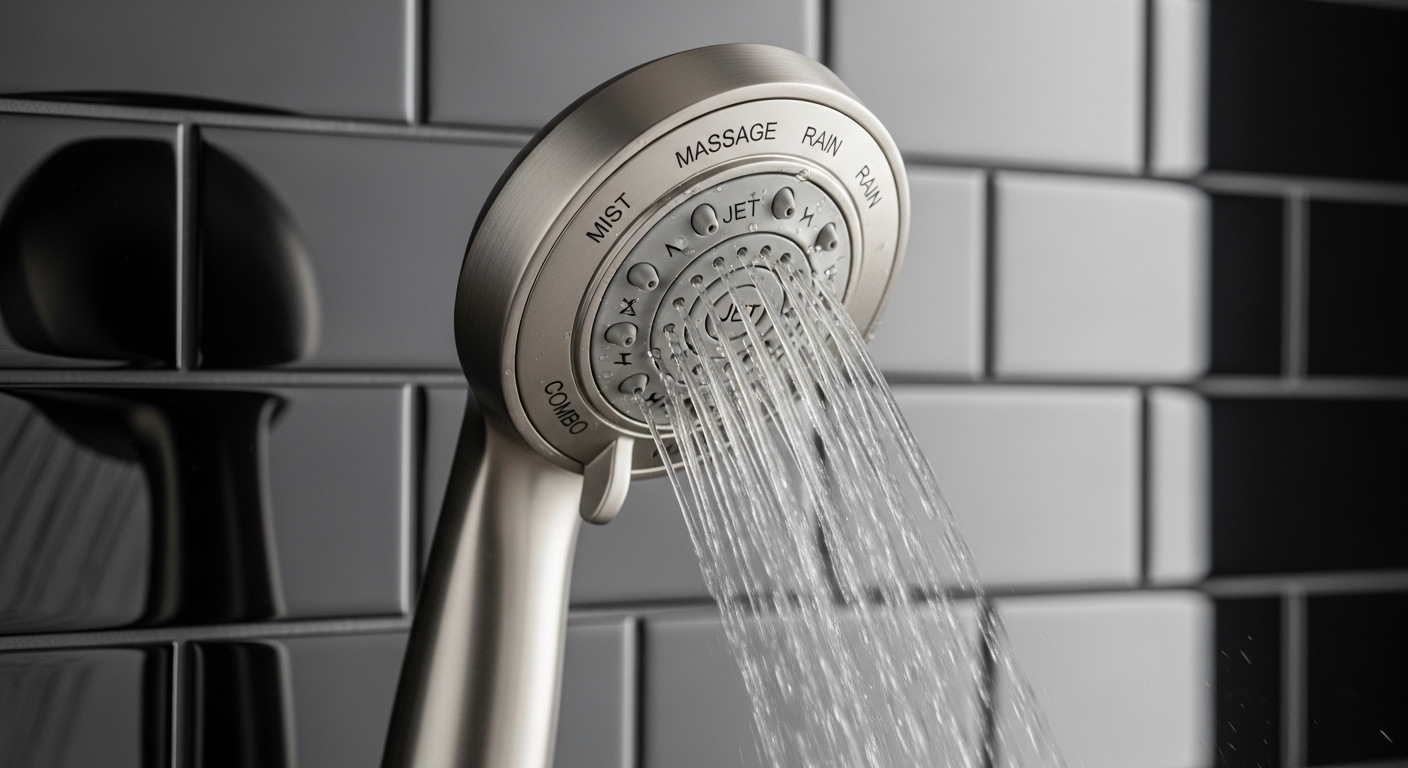
If you’ve been searching for a handheld shower head with jet spray that doesn’t feel like a watered-down massage chair, you’re in the right place. After years of testing, installing, and warranty-handling thousands of shower heads at KES, we’ve learned exactly which features matter, which marketing claims are fluff, and what separates a $15 disappointment from a $50 shower upgrade you’ll actually feel every morning. This guide walks you through it like a friend who happens to make these for a living.
What exactly is a “jet spray” on a handheld shower head, and is it different from a massage setting?
A jet spray is a focused, high-velocity stream — usually produced by a smaller cluster of nozzles in the center of the shower face — that concentrates water pressure into a narrower beam than a standard rain or full-body spray. It feels less like rainfall and more like a firm thumb pressing into a sore muscle.
“Massage” and “jet” are often used interchangeably on packaging, but there’s a real engineering difference. A massage mode pulses water (a turbine or rotating disc chops the stream so it hits you in rapid bursts), while a true jet spray simply funnels more flow through fewer holes to raise the local velocity. The best handheld shower head with jet spray gives you both: a pulsating massage when you want rhythm, and a pinpoint jet when you want a steady, deep stream — say, to rinse soap out of long hair or blast pet shampoo off a Labrador.
How much water pressure do you actually need for a jet spray to feel powerful?
You need a minimum of about 45 PSI at the wall outlet and a flow rate close to 2.5 GPM for a jet spray mode to feel genuinely strong. Below 40 PSI, even the best jet nozzles will feel like a garden sprinkler.
This is the single biggest reason people are disappointed by their first handheld upgrade — they buy a $20 shower head and blame it, when the real problem is their home’s water pressure. Older homes (especially anything built before 1990) often run 35–45 PSI at the shower riser. If that’s you, look for a jet-spray head with fewer, larger nozzles in jet mode rather than dozens of pinprick holes. Fewer holes = higher velocity per hole = the “jet” feeling you’re paying for. If you suspect a pressure problem, our breakdown of how water pressure affects faucet flow walks through the diagnostic steps in under five minutes.
Quick pressure check before you buy
- Fill a 1-gallon bucket from your shower arm (no head attached). If it takes more than 30 seconds, your flow is below 2 GPM.
- Buy a $10 hose-bibb pressure gauge from any hardware store and screw it onto an outdoor spigot — under 40 PSI means you need to address pressure before blaming the shower head.
- Remove any old flow restrictors only if your local code permits it (most modern KES heads already use 2.5 GPM compliant inserts).
What features separate a great handheld shower head with jet spray from a junk one?
Five things matter, in this order: spray-mode quality, hose material, mount design, flow rate, and finish durability. Everything else (color of the LED, “ionic filter” beads, fake chrome accents) is marketing decoration.
1. Spray modes that are actually distinct
Cheap heads advertise “7 spray settings” but three of them feel identical. Look for a model where rain, jet, massage, and a mist mode are each obviously different when you flip the selector. KES designs typically lock into each mode with a tactile click so you’re not hunting for the position in the dark.
2. Hose material and length
Stainless steel braided hoses last 5–7 years on average; PVC-core hoses crack within 18–24 months from hot-water flexing. Length matters too — 60 inches is the sweet spot. Anything under 48 inches won’t reach a bathtub’s far end; anything over 72 inches tends to coil awkwardly and pull the wand off its dock.
3. Mount type
You’ll see three options: slide-bar (height-adjustable), fixed wall bracket, and overhead diverter (uses the existing shower arm). The overhead diverter is the most common DIY upgrade — no drilling, threads onto your existing 1/2-inch NPT shower arm in 90 seconds.
4. Flow rate compliance
U.S. federal law caps shower heads at 2.5 GPM. California, Colorado, and New York cap at 1.8 GPM. Buy the right one for your state — a 2.5 GPM head sold in California can technically void rebates and home insurance riders.
5. Finish
Brushed nickel hides water spots best. Chrome shows everything but is the easiest to wipe clean. Matte black looks stunning new but is the highest-maintenance finish — our matte black care guide applies to shower heads too if you go that route.
Which spray modes do you actually need? (And which are gimmicks?)
For 95% of users, four modes cover everything: rain, jet, massage/pulse, and a mixed rain + jet. Anything beyond that is rarely used after the first week.
| Spray Mode | What It Feels Like | Best For | Use It Often? |
|---|---|---|---|
| Rain / Full | Gentle, wide coverage | Daily showering, kids | Yes — 60% of use |
| Jet / Power | Concentrated firm stream | Rinsing long hair, deep cleaning tub | Yes — 20% of use |
| Massage / Pulse | Rhythmic pulsing burst | Sore muscles, post-workout | Sometimes — 10% |
| Mist | Fine cool spray | Hot summer rinses, shaving lather | Rarely — 5% |
| Rain + Jet combo | Wide pattern with central focus | Washing kids, pets, tub cleaning | Sometimes — 5% |
| “Eco” mode | Reduced flow rain | Conserving water; rarely satisfying | Almost never |
Heads that advertise 8, 10, or even 12 modes are usually adding throwaway variations of the same three patterns. A focused 3-to-5-mode shower head with a strong jet is a better daily driver than a 10-mode head where none of the modes is exceptional.
What’s the best handheld shower head with jet spray for hard water areas?
If you have hard water, buy a head with silicone (rubber) nozzle tips, not metal or hard plastic. Silicone nubs let you wipe mineral buildup off with your thumb in seconds — calcium can’t bond to flexible silicone the way it crusts onto brass nozzles.
Hard water (above 7 grains per gallon, which covers most of the Midwest, Texas, and the desert Southwest) is the single biggest reason shower heads “lose pressure” within a year. The jet spray mode is hit hardest because the smallest nozzles clog first. Look for these specific signs of hard-water-friendly design:
- Silicone soft-touch nozzles on every spray face, not just the rain mode.
- Removable filter screen at the inlet — you’ll want to clean it every 3–6 months.
- Brass ball joint instead of plastic — plastic joints crack from limescale stress within 2 years in hard-water homes.
- Acid-resistant chrome plating rated to handle weekly vinegar soaks (KES finishes are tested to ASME A112.18.1 spec for exactly this).
A quarterly 30-minute soak in white vinegar will restore 90% of lost jet-spray force in any handheld with silicone nozzles. If you’re also dealing with clogged faucets elsewhere, our piece on preventing faucet corrosion covers the same chemistry.
How do I install a handheld shower head with jet spray myself? (And do I need a plumber?)
You don’t need a plumber. A standard handheld shower head with jet spray installs in 10–15 minutes using only an adjustable wrench, plumber’s tape, and an old rag. The connection is universal in the U.S. — every shower arm uses 1/2-inch NPT threads.
The 5-step install
- Unscrew the old shower head by turning counterclockwise. If it’s stuck, wrap the arm with a rag and use slip-joint pliers. Don’t yank — you can crack the in-wall elbow.
- Clean the shower arm threads with the rag. Old Teflon tape and pipe dope must come off.
- Wrap new plumber’s tape clockwise around the threads, 3 wraps. Clockwise so it tightens when you screw the head on, not loosens.
- Thread on the diverter mount hand-tight, then give it a final 1/4 turn with a wrench. Do not overtighten — you’ll crush the gasket.
- Attach the hose and wand, turn on the water, and check for drips at both ends. A drip at the wall means more Teflon tape; a drip at the wand means the rubber washer is missing or pinched.
For mounting height — especially if you’re installing a slide bar or relocating the arm — our dedicated handheld shower head mounting height guide has the exact code-compliant numbers (80 inches off the floor for the diverter, 48 inches max for ADA-accessible cradles).
If your install includes a new shutoff valve in the wall, you’re entering more advanced territory — see our handheld shower head kit with valve buying guide before you open up drywall.
How much should you spend on a handheld shower head with jet spray?
The sweet spot is $35–$65. Below $25 you’re getting plastic internals that fail within 18 months. Above $80 you’re paying for brand names (Moen, Delta, Hansgrohe) where the same internal cartridge often costs the brand under $4 to make.
| Price Range | What You Get | Realistic Lifespan | Who It’s For |
|---|---|---|---|
| Under $20 | Plastic body, PVC hose, 3 weak modes | 12–18 months | Rental flips, short-term use |
| $25–$45 | ABS w/ chrome plate, stainless hose, 5 modes | 3–5 years | Most homeowners — best value |
| $45–$75 | Brass internals, silicone nozzles, premium finish | 5–8 years | Hard-water homes, daily heavy use |
| $75–$150 | Designer brand markup, identical internals to mid-range | 5–8 years | Aesthetic-driven remodels |
| $150+ | European luxury (Hansgrohe, Grohe) | 8–12 years | Whole-home matching suites only |
Honest assessment: a $45 KES handheld with jet spray will outperform a $90 big-box-brand head in pressure tests. The difference is that KES skips the retailer markup chain — we sell direct, so the engineering budget goes into the product, not into Home Depot’s shelf-stocking fee.
Will a high-pressure jet spray waste water?
No — pressure and flow rate are independent. A 2.5 GPM jet-spray head uses the exact same amount of water per minute as a 2.5 GPM rain head. It just feels stronger because the water hits a smaller surface area at higher velocity.
This is the single most misunderstood spec in shower marketing. You can have a satisfyingly powerful jet stream while staying fully compliant with U.S. EPA WaterSense standards (≤2.0 GPM for WaterSense-labeled models). If you’re in California’s 1.8 GPM zone, look specifically for the WaterSense logo plus a “high pressure” claim — those models use precisely engineered nozzle geometry to maximize feel-per-gallon.
How long should a handheld shower head with jet spray last, and what voids the warranty?
A well-built handheld shower head with jet spray should last 5–8 years of daily use. KES models carry a limited lifetime warranty on the finish and a 5-year mechanical warranty on the diverter cartridge — but warranties are voided by three common owner mistakes.
- Using bleach or abrasive cleaners — kills the chrome bond. Vinegar and dish soap only.
- Overtightening the hose connections — cracks the brass collar. Hand-tight plus 1/4 wrench turn is the spec.
- Letting the hose hang under tension from the wand cradle for years — stretches and weakens the inner liner. Coil it on the floor of the tub when not in use.
Quality KES heads are independently tested to ASME A112.18.1 / CSA B125.1 standards and carry NSF/ANSI 61 certification for drinking-water-grade brass — meaning no lead leaches into rinse water, which matters more than people realize for households with kids.
FAQ
Can I add a handheld shower head with jet spray to my existing fixed shower head?
Yes. Use a diverter that mounts between your shower arm and your existing fixed head — it lets you switch between the overhead and the handheld with a small lever. Installation takes 10 minutes and requires no plumbing changes inside the wall.
Why does my jet spray feel weak even though it’s brand new?
The most common cause is the flow restrictor disc inside the inlet. The second most common cause is leftover thread sealant from the old install partially blocking the inlet screen. Unscrew the head, pop off the inlet screen, rinse it, and reinstall — you’ll usually recover 20–30% pressure instantly.
Are handheld jet-spray shower heads safe for elderly or mobility-limited users?
Yes, and they’re actually recommended by occupational therapists. Pair the handheld with a slide bar (so the wand can sit at sitting-height) and a shower bench. The jet spray is especially useful for rinsing under arms and between toes without bending.
Can a handheld shower head with jet spray be used to wash dogs in the tub?
That’s one of the top use cases. The jet mode penetrates thick fur far better than rain or mist, and the flexible hose lets you spray under the belly and legs. Just make sure you have a 60-inch or longer hose to reach the tub corners comfortably.
What’s the difference between a handheld shower head and a shower head with a hose?
Functionally the same thing, but “handheld” implies the wand is the primary fixture, while “shower head with hose” usually means a fixed head with a detachable hose attachment. Handhelds give you more spray modes and better ergonomics; hose attachments are cheaper.
Do I need a special valve for a handheld with jet spray, or will my existing shower valve work?
Your existing valve almost certainly works — handheld heads are designed for standard 1/2-inch NPT shower arms with normal hot/cold mixing valves. You only need a special valve if you’re adding a body spray system or splitting flow between two heads simultaneously.
How often should I clean a jet-spray shower head?
Soak the head in a 50/50 white vinegar and warm water solution for 30 minutes every 2–3 months. In hard-water areas, do it monthly. Wipe silicone nozzles with your thumb after each soak to dislodge loosened mineral deposits.
Final word from the KES team
Author note: This guide was written by the KES product team, who design, test, and warranty over 200,000 shower fixtures sold across the U.S. each year. Every recommendation here is based on returned-unit failure analysis, in-house pressure testing rigs, and direct customer feedback — not affiliate-driven listicles. KES products are independently tested to ASME, CSA, and NSF/ANSI 61 standards, and shipped from U.S. warehouses with same-day support from real plumbers, not chatbots.
If you’re ready to upgrade, our handheld shower head with jet spray collection at www.kesfaucet.com includes models from $29 to $89, all backed by our limited lifetime finish warranty. And if you’re remodeling the broader bathroom, you might also enjoy our take on standard heights of bathroom fittings to make sure everything lines up the first time.
您好!请登录