 Kes Faucets


What Is a Brushed Nickel Faucet Cover and Do You Actually Need One?
浏览次数:89 分类:Product
Here is the complete, publish-ready HTML article:
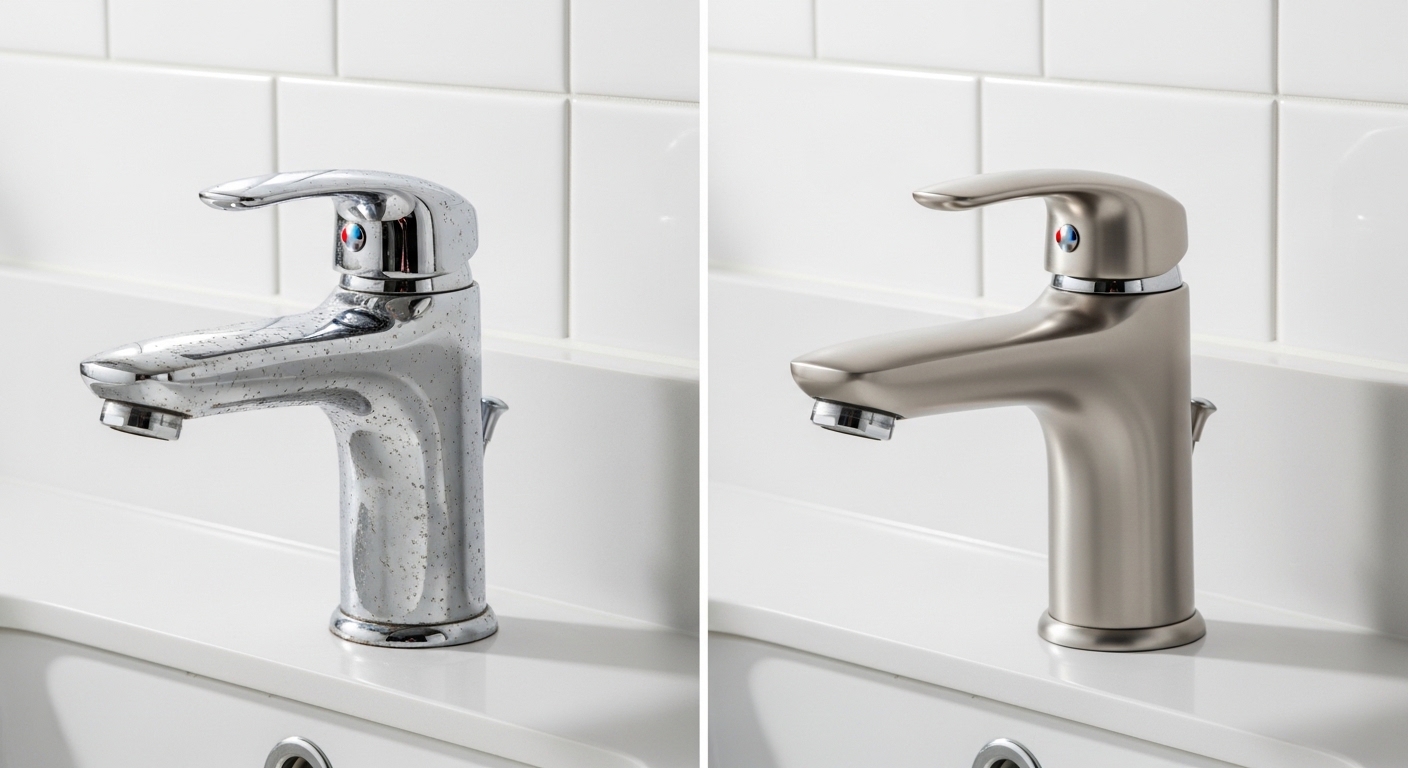
If you’ve searched for a brushed nickel faucet cover, you almost certainly have a faucet that functions fine but looks rough — pitted chrome, peeling finish, a builder-grade handle that clashes with your new brushed-nickel hardware, or an ugly exposed valve sticking out of the wall. The good news: you usually don’t need a plumber or a full faucet swap to fix the look. The honest news: a cover is a cosmetic and protective part, not a repair part, and there are three completely different products people call by the same name. Let’s sort out exactly which one you need, how to size it, and when a cover is the smart move versus when you should just replace the faucet.
What exactly is a “brushed nickel faucet cover” — and which type do I need?
A brushed nickel faucet cover is one of three things, and people use the phrase loosely for all of them. Figure out which problem you have first, then pick the matching product. Here’s the quick decoder:
- Decorative sleeve / shell (cosmetic refresh): A thin metal or coated-plastic shell shaped to the faucet body and spout. It slips over an existing single-handle or two-handle faucet to hide scratches and recolor the finish. This is what most homeowners mean.
- Escutcheon / base plate cover (hole and gap hiding): A flat or domed ring/plate in brushed nickel that covers the deck holes, an old caulk ring, or the wall opening behind a tub spout or shower valve. Technically a “cover plate,” but constantly searched as a faucet cover.
- Outdoor / freeze faucet cover (protective): An insulated dome that snaps over an outdoor hose bibb to prevent winter freeze. Some come in a brushed-nickel-look finish to match exterior fixtures. Totally different purpose — protection, not looks.
So before you buy, answer one question: am I trying to change how it looks, hide a hole, or stop it from freezing? The rest of this guide focuses mostly on the first two — the indoor cosmetic and escutcheon covers — because that’s what 90% of brushed-nickel-cover shoppers actually want. If your faucet has a deeper issue like intermittent flow, a cover won’t help; start with our guide on why your faucet stops working suddenly instead.
Should I buy a brushed nickel faucet cover or just replace the faucet?
Buy the cover if the faucet works and you only hate the finish; replace the faucet if it drips, wobbles at the base, or is older than about 15 years. That’s the 10-second rule. A cover solves an appearance problem for $10–$30 in five minutes. A new faucet solves a mechanical problem but costs $60–$250 and an hour of work.
Here’s the way I think about it as someone who handles fixture returns and complaints all day: a cover is brilliant value when the underlying faucet is mechanically sound. Cartridges, aerators, and valves last far longer than finishes — it’s totally normal for the chrome to look terrible while the faucet still flows perfectly. In that case, paying to rip out a working faucet just because it’s scratched is wasteful. But the moment there’s a functional fault, the cover becomes lipstick on a leak. Use this checklist:
| Your situation | Buy a cover? | Why |
|---|---|---|
| Finish is scratched/spotted but faucet flows fine | ✅ Yes — best use case | Cosmetic problem, cosmetic fix |
| New brushed-nickel hardware, old chrome faucet | ✅ Yes | Match finishes cheaply without a swap |
| Ugly exposed valve or extra deck hole | ✅ Yes — use an escutcheon plate | That’s exactly what a cover plate is for |
| Faucet drips, sputters, or leaks at the base | ❌ No | Fix or replace the faucet first |
| Handle is loose / faucet wobbles | ❌ Not yet | Tighten the mounting first |
| Faucet is 15+ years old | ⚠️ Maybe | Cartridge failure is near — consider replacing |
If the table points you toward “tighten it first,” that’s a 10-minute job — our walkthrough on how to tighten a wobbly faucet covers it before you spend a cent on a cover.
How do I measure for the right size so the cover actually fits?
Measure three things before you order: the faucet body diameter (or the deck-hole diameter for an escutcheon), the spout reach if it’s a full sleeve, and the height from the deck to the top of the spout. A cover that’s even a few millimeters too small simply won’t seat, and one that’s too large will spin or rattle. Covers are not as universal as listings imply, so measuring is the difference between a clean look and a returned package.
Grab a tape measure (millimeters are easier than inches here) and record:
- Base / body diameter: the widest part of the faucet body where the sleeve has to slide past. For escutcheons, measure the hole or the existing base plate’s outer diameter.
- Spout reach: horizontal distance from the center of the base to the spout tip — full sleeves are shaped to this.
- Overall height: deck surface up to the highest point of the spout.
- Handle clearance: note single-handle vs. two-handle (8-inch widespread vs. 4-inch centerset), because sleeves are cut differently for each.
Standard escutcheon plates are usually 8 to 10 inches wide for widespread setups and around 4 to 6 inches for centerset; tub-spout cover plates commonly run 3 to 4.5 inches. If you’re not sure your replacement part will line up with the existing valve or holes, read how to check faucet compatibility before buying — the same compatibility logic applies to covers and plates.
Will a brushed nickel cover actually match my other brushed nickel fixtures?
Usually close, but rarely a perfect twin — “brushed nickel” is a finish family, not a single color, so expect a small variance in warmth and grain direction. Brushed nickel ranges from cool and silvery to slightly warm and golden depending on the maker. A cover from one brand sitting next to a faucet from another can read as a near-match in most light and a visible mismatch in bright daylight.
Three things drive whether it blends in:
- Undertone: Some brushed nickel leans cool/gray, some leans warm/champagne. Hold the cover near your existing piece in natural light before committing.
- Brush grain: The fine directional lines should run the same way (usually lengthwise on a spout). Mismatched grain catches the eye more than a slight color shift.
- Sheen: Brushed (satin) vs. polished nickel are different animals. A polished cover on brushed fixtures will look obviously off.
Honestly, a little intentional mixing is on-trend right now and totally fine — the design world has fully embraced layered metals. If you’re nervous about matching exactly, our piece on mixing metals and whether you can mismatch faucets shows how to make slight differences look deliberate rather than accidental. The trick is consistency within a zone: keep the faucet, handles, and drain in the same finish family, and let the towel bar or lighting be the contrast piece.
How do I install a slip-on faucet cover or escutcheon? (5-minute job)
For a slip-on sleeve: shut off the water at the supply valves, clean the faucet, slide the cover over the body until it seats, and secure it with the included set screw or adhesive ring. For an escutcheon plate: loosen the existing plate or handle, slide the new brushed nickel plate against the wall or deck, and re-tighten. No special tools beyond an Allen key and maybe plumber’s tape. Here’s the full sequence:
- Turn off the water at the shutoff valves under the sink (or the main, for a tub/shower). You won’t open the plumbing, but it’s good insurance if a handle has to come off.
- Clean the surface. Wipe the faucet body with mild soap, dry it fully, and remove any old caulk or limescale. Covers seat better on a clean surface, and trapped grime breeds corrosion.
- Dry-fit first. Slide the cover or plate on without adhesive to confirm the fit and orientation (grain direction matters).
- Secure it. Tighten the set screw with the included hex key, or peel the adhesive ring, or for an escutcheon re-seat the handle/retaining nut. Don’t over-tighten — these shells dent.
- Seal if needed. For wall plates near a tub spout or shower valve, run a thin bead of clear silicone along the top edge only (leave the bottom open so any water behind it can escape).
- Restore water and check. Turn the supplies back on and confirm nothing leaks around any handle you disturbed.
If your project is really a tub-spout escutcheon, you may be partway into a bigger refresh — our guides on installing a tub spout extension and replacing an old tub faucet walk through the connected steps if you decide to go further than just a cover.
Are brushed nickel covers durable, or will they peel and rust?
A good brushed nickel cover lasts for years if it’s solid stainless steel or properly PVD-coated brass; a cheap chrome-plated plastic shell can peel, chip, or discolor within a year, especially around hard water. The material under the finish matters far more than the price tag. Brushed nickel itself is a forgiving, fingerprint-hiding finish — its matte texture conceals water spots better than polished chrome — but that only helps if the base material resists corrosion.
| Cover material | Typical price | Durability | Best for |
|---|---|---|---|
| Stainless steel sleeve | $15–$30 | Excellent — won’t rust, won’t peel | Long-term refresh, hard-water homes |
| PVD-coated brass escutcheon | $12–$25 | Excellent — bonded finish resists wear | Hole-hiding, wet wall areas |
| Zinc-alloy plated plate | $8–$15 | Good — fine if kept dry | Dry deck areas, budget jobs |
| Chrome-plated plastic sleeve | $5–$10 | Poor — can peel/yellow in 1 yr | Short-term, rentals, staging |
To keep any brushed nickel surface looking new, skip abrasive pads and acidic or bleach cleaners — they dull the brush grain. Wipe with mild dish soap and water, dry it, and buff along the grain. The same maintenance habits that protect a finished faucet protect the cover; our routines for preventing faucet corrosion apply directly. And if you’re choosing between finishes for the long haul, it’s worth knowing how brushed nickel stacks up against other warm tones in our antique brass vs. champagne bronze comparison.
What does a brushed nickel faucet cover cost, and where do covers fall short?
Expect to pay $5–$30 for indoor cosmetic covers and escutcheons, and $10–$25 for insulated outdoor freeze covers. That’s the appeal — it’s a fraction of a $60–$250 faucet replacement. But set expectations honestly, because covers have real limits:
- They don’t fix function. Drips, low pressure, and stiff handles all live inside the faucet. A cover changes nothing there. If pressure is your real issue, see how water pressure affects faucet flow.
- Fit is finicky. Odd-shaped or designer faucets often have no matching sleeve. Escutcheons are more universal than full sleeves.
- Match isn’t guaranteed. As covered above, brushed nickel varies between brands.
- They can trap moisture. A poorly sealed cover over a wet area can hold water against the faucet and actually encourage corrosion — which is why drainage and a clean, dry install matter.
The smart play: use a cover when the math clearly favors it — a working faucet, a tight budget, a rental you can’t fully renovate, or a quick refresh before selling. When the faucet itself is on its way out, put that $30 toward a new fixture instead.
A note on standards, testing, and what to look for
For any cover that contacts water-wet areas (tub spouts, shower valves, deck plates near the sink), look for corrosion-resistant materials and, ideally, parts from a manufacturer whose faucets meet recognized plumbing standards such as ASME A112.18.1 / NSF/ANSI 61 for wetted components. Covers themselves aren’t pressure-bearing, so they’re not certified the way valves are — but buying from a brand that builds to those standards is a good proxy for material quality. A reputable cover or escutcheon should carry at least a limited finish warranty; if there’s no warranty at all, treat it as a short-term part.
FAQ
Can a brushed nickel faucet cover stop a leak?
No. A cover is purely cosmetic or protective — it sits on the outside of the faucet and has no effect on the cartridge, washers, or valve seats where leaks originate. If your faucet drips, fix or replace the internal parts first, then add a cover for looks if you like. Covering a leaking faucet just hides moisture and can speed up corrosion underneath.
Will a brushed nickel cover fit any faucet?
Not automatically. Full slip-on sleeves are shaped to specific body and spout dimensions, so you must measure your faucet’s base diameter, spout reach, and height first, and match single- vs. two-handle styles. Escutcheon and base-plate covers are more forgiving because they only need to match the deck-hole spacing (commonly 4-inch centerset or 8-inch widespread). When in doubt, check compatibility before buying.
Do brushed nickel and stainless steel covers look the same?
They’re close but not identical. Brushed nickel is usually slightly warmer and softer in tone, while stainless tends to look cooler and more silver-gray. Both hide fingerprints and water spots well thanks to their satin texture. If you’re matching to existing stainless appliances, a true stainless or “satin nickel” cover is the safest bet; for matching brushed-nickel faucet handles, choose brushed nickel.
How long does a brushed nickel faucet cover last?
A solid stainless steel or PVD-coated cover can last 5–10+ years without peeling or rusting. A cheap chrome-plated plastic version may start peeling or yellowing within a year, especially in hard-water or high-moisture bathrooms. Material is the deciding factor — pay a few dollars more for metal if you want it to last.
Is it cheaper to use a cover or replace the faucet?
A cover is dramatically cheaper — typically $5–$30 versus $60–$250 plus installation for a new faucet. That makes covers ideal when the faucet still works and you only dislike the finish. But if the faucet leaks, wobbles, or is more than about 15 years old, replacement is the better long-term value because a cover can’t address mechanical wear.
Can I put a brushed nickel cover over a chrome or oil-rubbed bronze faucet?
Yes — that’s one of the most popular reasons to use one. As long as the dimensions match, a brushed nickel sleeve or escutcheon will hide the original chrome, bronze, or dated finish underneath and present a clean brushed-nickel face. It’s the fastest way to re-coordinate a bathroom after you’ve changed your hardware or lighting without swapping the working faucet.
About the author: This guide was written by the kesfaucet product team, drawing on hands-on testing of faucet finishes, escutcheons, and cover plates across centerset, widespread, and tub-spout configurations. We handle real customer fitment questions and returns daily, so the sizing and durability advice here reflects what actually works on real sinks — not spec-sheet theory.
About kesfaucet: kesfaucet (www.kesfaucet.com) designs and sells faucets, shower systems, tub fixtures, and bathroom accessories built to recognized plumbing standards, backed by limited warranties on finish and function. We focus on durable finishes — including brushed nickel — engineered to resist corrosion and everyday wear.
您好!请登录