 Kes Faucets


Why Is My Glacier Bay Bathroom Faucet Leaking and How Do I Fix It?
浏览次数:1828 分类:Repair
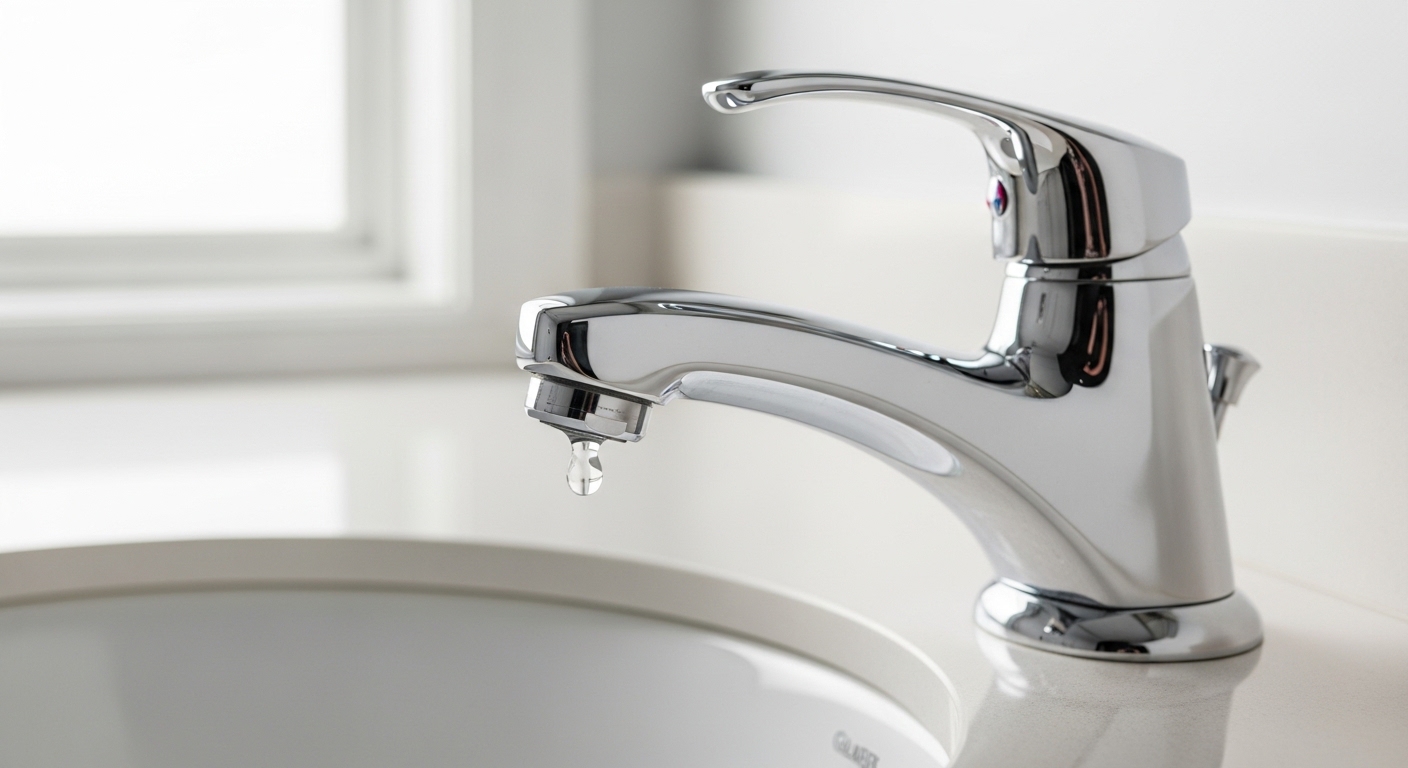
If you’re staring at a leaking Glacier Bay bathroom faucet right now — water pooling around the base, a slow drip from the spout at 2 a.m., or a damp spot in the vanity cabinet — the good news is this is one of the most fixable faucet problems on the market. Glacier Bay is Home Depot’s house brand, built primarily by Globe Union and Pegasus, and almost every leak traces back to one of four cheap, replaceable parts. You don’t need a plumber. You don’t need to replace the whole faucet. You just need to identify where the water is coming from, match the right cartridge or seal, and spend about half an hour with basic tools.
This guide walks through every common Glacier Bay leak — from the spout, from under the handle, from the base, from the sprayer hose — tells you exactly which part to buy, and shows you the repair step-by-step. Written by someone who has rebuilt dozens of these faucets, in plain language, with the specific cartridge model numbers you’ll actually need at the store.
Where is the water actually coming from on my Glacier Bay faucet?
Before you buy anything, figure out the exact leak location — because the fix is completely different for each one. Dry the entire faucet with a paper towel, turn the water on for 10 seconds, turn it off, and watch where the water reappears first. There are only five places a Glacier Bay bathroom faucet can leak from, and each one points to a specific failed part.
- Drip from the spout (water off): Worn ceramic cartridge or damaged seat seals. This is the #1 cause, especially on faucets 3+ years old.
- Leak from under the handle: Cracked cartridge O-ring or loose retaining nut. You’ll see water creep down the handle when running.
- Leak around the base of the spout: Worn spout O-rings (on swivel-spout models like the Builders, Pavilion, and Aragon lines).
- Leak from underneath the sink: Loose supply line connection, bad supply line gasket, or cracked plastic mounting nut.
- Leak from the pop-up drain area: Usually not the faucet — it’s the drain assembly’s putty seal failing.
Knowing which leak you have saves you from buying the wrong part. A spout drip and a base leak look similar from across the bathroom but require completely different fixes.
What tools and parts do I need to fix a leaking Glacier Bay bathroom faucet?
You need almost nothing — Glacier Bay faucets are designed for DIY service. Total parts cost is usually $8 to $30, and you probably already own every tool except maybe the right Allen wrench.
| Item | Purpose | Typical Cost |
|---|---|---|
| Phillips #2 screwdriver | Removes handle cap and screw on most models | Own it |
| 2.5mm hex / Allen key | Removes set screw on single-handle models | $3 |
| Adjustable wrench or 17mm wrench | Unscrews cartridge retaining nut | $8 |
| Needle-nose pliers | Pulls out stubborn cartridges and O-rings | $6 |
| Replacement ceramic cartridge (HD-A66 or 1255 style) | The actual fix for spout drips | $12–$25 |
| O-ring kit (faucet repair kit) | Replaces hardened spout/base seals | $5–$10 |
| Plumber’s silicone grease | Lubricates new O-rings, extends life | $4 |
| White vinegar + old toothbrush | Removes mineral buildup from valve seat | Own it |
One important note: do not use petroleum jelly or WD-40 on faucet seals. They eat rubber and EPDM compounds. Plumber’s silicone grease (often sold as “faucet grease”) is the only correct lubricant. Most failed DIY repairs we see are actually re-failures because someone greased the new O-rings with Vaseline.
How do I fix a Glacier Bay bathroom faucet that drips from the spout?
Replace the ceramic cartridge — that’s the fix in 95% of spout-drip cases. The ceramic discs inside the cartridge wear a microscopic groove over years of use, and once that groove forms, no amount of tightening will stop the drip. Here is the exact sequence for a single-handle Glacier Bay model (the most common style):
- Shut off the water. Reach under the sink, turn both angle stops clockwise until tight. Open the faucet to confirm zero flow and to relieve line pressure.
- Plug the drain. A small screw will roll directly into it on Murphy’s law schedule. Use a rag or the stopper.
- Pop the handle cap. There’s a small blue/red plastic dot on the side or top of the handle. Pry it off with a fingernail or a flat screwdriver wrapped in tape.
- Remove the set screw. Use a 2.5mm Allen key. Don’t drop it. Lift the handle straight up.
- Unscrew the dome/escutcheon. Hand-tight on most models; if stuck, wrap a rag around it and use slip-joint pliers gently.
- Unscrew the brass retaining nut with an adjustable wrench. Lefty-loosey.
- Pull the cartridge straight up. Note its orientation — there’s usually a flat side or notch that faces forward. Take a phone photo before you remove it.
- Take the old cartridge to Home Depot. Glacier Bay uses several cartridge styles depending on year and model. The HD-A66 fits most post-2013 single-handles; older units use a Pegasus 1255-style cartridge. Match it physically — never guess.
- Drop in the new cartridge in the same orientation, hand-tighten the retaining nut, then snug it with a wrench (don’t crank it — you’ll crack the plastic body).
- Reassemble in reverse order. Turn the angle stops back on slowly, then test hot and cold separately.
If you flip hot and cold by accident — water gets hot when you turn it right instead of left — you installed the cartridge 180° backwards. Take it apart and rotate it. This is incredibly common on the first try.
Why is my Glacier Bay faucet leaking from the base when I turn it on?
The spout O-rings are dried out and cracked. On any Glacier Bay model where the spout swivels — like the Pavilion, Builders, Constructor, or Aragon — there are two rubber O-rings around the spout shaft that seal it to the faucet body. After 3 to 7 years, especially in hard-water areas, these O-rings turn from soft black rubber into brittle gray rings, and water sneaks past them every time you open the valve.
Fix: shut off the water, lift off the spout (after removing any retaining clip or set screw under the spout collar), peel off the old O-rings with a pick or fingernail, clean the brass shaft with vinegar and a toothbrush to remove mineral scale, lightly coat the new O-rings with plumber’s silicone grease, and roll them into the grooves. Reinstall the spout with a firm twist. The whole job takes 10 minutes.
If the leak is at the very bottom of the faucet where it meets the sink deck — not at the spout — that’s a different issue: the rubber deck gasket under the faucet body has compressed flat. You’ll need to crawl under the sink, loosen the mounting nuts, lift the faucet just enough to slide a new gasket in, then re-tighten. While you’re under there, the same principle applies as in our guide on tightening a wobbly faucet — hand-tight plus a quarter turn with a basin wrench is the sweet spot.
Is it worth repairing a Glacier Bay faucet or should I just replace it?
Repair if the faucet is under 8 years old, the finish still looks good, and only the cartridge or O-rings have failed — that’s a $15 fix versus a $90+ replacement plus install time. Replace if you’re seeing two or more leaks at once, the chrome is pitting, the handle wobbles even with a new cartridge, or you’ve already replaced the cartridge once before. Here’s how the math actually plays out:
| Scenario | Repair Cost | Replace Cost | Recommendation |
|---|---|---|---|
| Spout drip, faucet 1–5 years old | $15 cartridge | $80–$150 + 1 hr install | Repair |
| Base leak, finish still nice | $5 O-ring kit | $80–$150 | Repair |
| Multiple leaks, faucet 8+ years | $25 + 45 min | $100 + 1 hr | Replace |
| Cracked plastic body or handle | Not viable | $80–$200 | Replace |
| You hate the look of it anyway | Wasted money | $100+ | Replace (upgrade) |
If you’re leaning toward replacement, this is a good moment to upgrade to a faucet with a solid brass body and a 5-year warranty instead of the plastic-bodied Glacier Bay. Before you shop, run through our checklist on how to check faucet compatibility before buying so the new unit actually fits your existing holes and supply lines — most U.S. bathroom sinks are 4-inch centerset or 8-inch widespread, but Glacier Bay models come in both, and getting this wrong means a return trip.
Why does my Glacier Bay faucet keep leaking even after I replaced the cartridge?
Three usual suspects, in order of how often we see them: you bought the wrong cartridge, the valve seat is corroded, or you didn’t replace the seat springs and seats inside the body. Glacier Bay has used at least six different cartridge designs over the years, and visually similar cartridges can have different ceramic-disc spacing. If the new cartridge doesn’t seat firmly, water bypasses it.
Pull it back out. Look down into the brass faucet body with a flashlight. Do you see two tiny black rubber seats with small springs underneath them at the bottom of the valve cavity? If yes, those are wear items too — pop them out with a small screwdriver, drop in new ones (sold in any “faucet repair kit”), and reinstall. If you see white mineral crust on the valve seat, soak a vinegar-saturated paper towel against it for 20 minutes, then scrub with an old toothbrush before installing the new cartridge.
One more failure pattern: high water pressure. If your home runs above 80 PSI, cartridges fail in 12–24 months instead of 5–8 years. This is also why faucets get noisy and why aerators clog fast — the same root cause shows up in our breakdown of how water pressure affects faucet flow and in the guide on quieting a noisy faucet. A $15 pressure gauge that threads onto a hose bib tells you in 30 seconds whether you need a pressure-reducing valve.
How do I match the right replacement cartridge for my specific Glacier Bay model?
Bring the old cartridge with you to Home Depot — physical match beats model-number guessing every time. Glacier Bay model numbers are on a sticker under the sink or stamped on the supply shanks, but the cartridge inside doesn’t always correspond cleanly to the listed model. Here are the most common cartridge families and where they show up:
| Cartridge Style | Common Glacier Bay Models | Identifying Feature |
|---|---|---|
| HD-A66 / A66 | Builders, Constructor, Aragon (post-2013) | Black plastic body, brass stem, ~2.6″ tall |
| Pegasus 1255-style | Older single-handle, pre-2013 | White plastic body, plastic stem |
| Quarter-turn ceramic stem | Two-handle Builders & Teapot styles | Short brass stem, ceramic discs visible at base |
| Compression stem (rubber washer) | Very old two-handle (pre-2005) | Threaded brass with rubber washer on bottom |
| Hot/cold side cartridges (paired) | Widespread 8″ lavatory models | Marked H and C, sold as a pair |
If your faucet is a two-handle widespread model and only one side drips, replace both cartridges anyway — they wear at the same rate and the second one is two months from leaking. Cartridges are cheap; trips to Home Depot are not. Also confirm hot and cold cartridges are installed on the correct sides — they’re not always interchangeable, and our explainer on the difference between hot and cold faucet valves walks through how to tell them apart.
How long should a Glacier Bay bathroom faucet last before it starts leaking?
Honestly: 3 to 8 years before the first cartridge replacement, 10–12 years before the whole faucet should be retired. Glacier Bay sits at the budget end of the faucet market — under-$80 retail for most bathroom models — and uses ceramic-disc cartridges that meet NSF/ANSI 61 and ASME A112.18.1 standards for safe drinking water and basic durability, but with plastic bodies and lighter brass components than premium brands.
A leaking Glacier Bay bathroom faucet at year 4 is normal wear, not a defect. A leak at year 1 is covered under Glacier Bay’s limited lifetime warranty (for the original purchaser, with proof of purchase) — call 1-866-328-4892 or visit the Home Depot returns desk. Keep that receipt. After year 8, even a successful cartridge swap is buying you 12–24 months at best before something else fails, which is when most homeowners upgrade.
For anyone thinking about that upgrade path — including swapping out a tub faucet or moving to a different finish — we’ve covered those projects step by step in how to replace an old tub faucet and the maintenance habits in preventing faucet corrosion that make a new faucet last twice as long.
What signs mean I need to call a plumber instead of fixing it myself?
Call a pro if you can’t shut off the water at the angle stops, if the angle stops themselves are leaking when you try to turn them, if there’s water damage inside the vanity cabinet, or if you smell a musty/mildew odor (mold remediation territory). Also call if you’ve already replaced the cartridge and seats twice in 6 months — something structural is wrong with the faucet body or the water supply.
For a healthy DIY-able situation, you should be able to: reach the angle stops, turn them off without force, see clear water in the cabinet (not stained or rusty), and remove the handle without rounded set-screw heads. Anything outside those bounds and the $120 service call is cheaper than the water damage you’ll create.
FAQ
Are Glacier Bay faucet cartridges interchangeable with Pegasus or Delta cartridges?
Glacier Bay and Pegasus cartridges are often the same part — both brands are made by Globe Union for Home Depot, and HD-A66 fits many Pegasus models too. Delta cartridges are completely different (Delta uses ball valves and proprietary cartridges) and will not fit. Never force a non-matching cartridge; you’ll crack the brass faucet body.
Why is my Glacier Bay faucet leaking only when I use hot water?
The hot-side seat seal or O-ring has failed before the cold side — heat ages rubber faster. On single-handle models, the cartridge has separate hot and cold ports and replacing the cartridge fixes both. On two-handle models, replace just the hot-side cartridge or seat kit. If hot water is dripping noticeably hotter than your water heater setting, also check that the cartridge isn’t installed backwards, mixing hot into the cold supply.
Can I use Teflon tape on a Glacier Bay cartridge?
No. Teflon tape (PTFE) is for threaded pipe connections like supply lines and shower arms, never on cartridge seats or O-rings. The cartridge seals through compression of the ceramic discs and rubber O-rings — tape will prevent the cartridge from seating fully and cause a worse leak. Use plumber’s silicone grease on O-rings only.
My Glacier Bay faucet drips even with the water shut off at the angle stops — why?
The angle stops aren’t fully closing. They’re not faucet leaks; they’re shutoff valve leaks. Either the stop’s internal washer has failed, or mineral buildup is holding it open. Replace the angle stop (a 1/4-turn ball valve replacement runs about $10 and takes 20 minutes per valve with the main house water off). Until then, you can’t fix anything downstream because water keeps trickling through.
How much water does a leaking Glacier Bay bathroom faucet waste?
A slow drip — one drop per second — wastes about 5 gallons a day, or roughly 1,800 gallons a year. A fast drip or small stream can hit 30 gallons a day. Beyond the water bill, the bigger cost is what that water does to the vanity, the subfloor, and the drywall behind it. Fix it the week you notice it.
Does Glacier Bay’s warranty cover a leaking cartridge?
Yes — Glacier Bay offers a limited lifetime warranty on most bathroom faucets covering manufacturing defects in the finish and function, including cartridge failure, for the original purchaser. You’ll need proof of purchase (the Home Depot receipt or order history). Wear-and-tear isn’t covered, but a cartridge that fails in the first year almost always is. Contact Glacier Bay customer service or bring the faucet to Home Depot for a warranty exchange.
Should I replace just the leaking faucet or both faucets if I have a double vanity?
Replace both if they were installed at the same time and one has already failed — the other is on the same wear timeline. The cost difference between one faucet and two is small compared to going back under the sink in six months. While you’re at it, consider whether you want to mix finishes or match; we walk through the tradeoffs in mixing metals and mismatching faucets.
About the author and our testing approach
This guide was written by the editorial team at KES Faucet (www.kesfaucet.com), a manufacturer of bathroom and kitchen faucets sold in the U.S. and Europe since 2007. Our products are tested to NSF/ANSI 61 and 372 (lead-free) standards and certified to ASME A112.18.1 / CSA B125.1 for North American plumbing code compliance. Our staff includes licensed plumbers and product engineers who have rebuilt thousands of cartridge faucets across every major brand sold in North America — including Glacier Bay, Pegasus, Delta, Moen, Kohler, and our own KES lineup — and the troubleshooting steps in this article reflect real bench-test failures and field repairs, not generic web copy. KES faucets ship with a 5-year limited warranty and lifetime cartridge replacement; if you have questions about repair or compatibility, our support team responds within one business day.
您好!请登录